

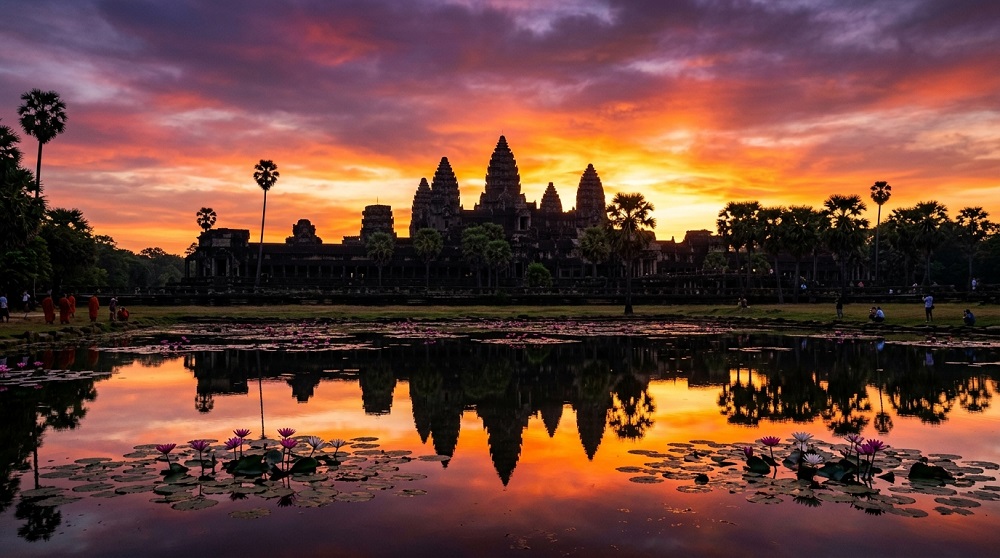
Angkor Wat is the largest religious monument on earth and most visitors spend 3 hours. That’s a mistake. It was constructed in early 12th century as a Hindu temple to Vishnu by King Suryavarman II, and subsequently turned to Buddhist use; it is rewarded by any one who approaches it at a leisurely pace.
Understanding the Layout
The temple is a scale model of the Hindu cosmos. The five towers in the centre are the peaks of Mount Meru, the outer walls are the mountains at the outer edge of the world and the moat the surrounding ocean.
The Western Causeway
You’ll be coming from the west which is quite uncommon for Khmer temples, even more so than Angkor Wat was dedicated to a funeral. Cross slowly and look back — the photo in the moat is the one all people are interested in.
The Bas-Relief Gallery
The least talked about section of the complex. Almost 2000 feet of carved sandstone tells the story of the Battle of Kurukshetra, the Churning of the Ocean of Milk, and Suryavarman’s own army on the march on the first level. Take a counter clockwise stroll and allow 45 minutes.
The Bakan (Upper Level)
The steps down through to the interior towards the central sanctuary are worthwhile following the view down through the courtyard. Access is limited, closed on some Buddhist holidays and minimum age is required. Lines fill up quickly—arrive early or late.
It’s beyond the Main Temple.
Bayon
Angkor Thom’s main attraction is the presence of over 200 huge carved faces of Bayon in the middle of the city. The light of mid-morning brings out the shadows in them best.
Ta Prohm
Partly un-restored, with roots of silk-cotton and strangler fig hanging on the stone. The crowds are heaviest here during the day – get here before 8am and after 3pm.
Banteay Srei
Straight ahead for a 40 minute drive is the best carving in Cambodia. Small, pink and well worth the detour on a multi-day pass.
Tickets and Passes
There are one-day, three-day, and seven-day passes available and can only be purchased at the official Angkor ticket office (Road 60) or via their website through Angkor Enterprise. They have changed their pricing in the past, so check the latest prices before traveling. A photo is printed on the pass, it is examined at each temple and cannot be transferred.
The ideal first-time pass is three days. Valid for 10 days, time to recuperate between visits.
Practical Advice
Timing Your Days
The reflecting pools are very popular for the sunrise starting at 5am. If space is more important, then arrive at sunrise on the last day, and visit Preah Khan or the Grand Circuit temples earlier in the day.
Dress Code
Must cover shoulders and knees to go to upper level of Angkor Wat – it is enforced. Shorts aren’t the best option in the summer heat even if lightweight long pants are.
Getting Around
Tuk-tuks are available for $15 to $25 per day depending on the route and drivers wait while you do sightseeing. Bicycles can work for the Small Circuit if you can’t handle the heat. For far off temples such as Beng Mealea or Koh Ker, air conditioned cars are useful.
Heat and Hydration
High humidity and temperatures routinely exceed 95°F. Always bring more water than you think you’ll need, make a break for the water during the day, and schedule challenging climbs for the morning.
Hiring a Guide
A trained guide ranges in cost from about $35 to $50 per day, and brings the carved stone to life. If there is not one, then the bas-reliefs are decoration. When it comes to the subject of one, they’re a 900-year-old political debate.
Reserve a minimum of three days to see Angkor. People who are in a rush don’t learn a lot from the temples.