

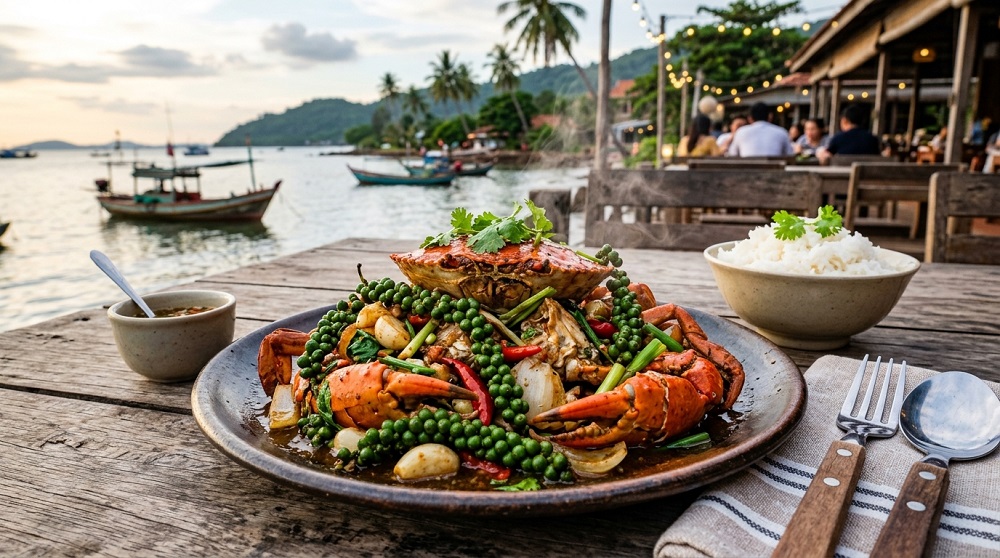
The first expectation is that this is not the beach shore of Cambodia. Kampot is located on a river, not on the sea, and Kep’s beach is a small stretch of sand bought from abroad. What these two towns have to offer is better: the best pepper in the world, caught from the water that morning, and a way of life that keeps people in for longer.
Kampot is the River Town.Kampot is the River Town.
The Riverfront
The Praek Tuek Chhu passes through rustic French storefronts in a wide, slow stream. Boat trips depart around 4:30pm and are followed by the firefly trips which depart after dark, when the mangroves will be illuminated. They cost a couple of dollars each.
Bokor National Park
On a twisting path, up into a former French hill station at 3,500 feet, cool and often cloaked in mist. The highlights include the ruined Bokor Palace Hotel, the abandoned church and Popokvil Falls. Rent a scooter only if you’re sure you can handle the mountain roads, hire a driver.
Caves and Countryside
Inside a limestone cave, one of Cambodia’s oldest buildings is a 7th century brick shrine dedicated to Funan culture, Phnom Chhngok. The Secret Lake and the salt fields around it make a quick half day scooter ride.
Table of Contents
The Pepper Farms
Why Kampot Pepper Matters
Kampot pepper is a protected geographical indication; pepper is only permitted to be called Kampot pepper when it is produced in a specific geographic area that has specific production methods. The soil and climate yield a floral, citrus accented heat that is highly sought after for chefs in Europe.
Visiting a Plantation
There are a number of farms that offer free or low-cost tours such as La Plantation and Sothy’s Farm. Tastings are done side by side with black, red, white, and long pepper and the differences are easily felt when tasting them together. Shop direct — it is more economical and fresher than shopping in town.
Best Time to Visit
Harvest is from February to May. Check back and witness hand picking.
Kep: Crab, Villas, and Jungle
The Crab Market
One of the reasons why most people attend. Blue swimmer crabs are held in a basket below the water and metres away from the grills. At a table at the water’s edge eat crab stir-fried with green Kampot pepper.
Kep National Park
The 8km loop trail winds around the hill behind town through the woods and by viewpoints. It’s done at a relaxed pace and is recommended to be completed early, taking 2 to 3 hours.
The Abandoned Villas
Kep was a resort of the elite in the 60’s and dozens of modern villas were left to the jungle following the war. Some are ruins, others have been restored as hotels. The weirdest fun in the town is to wander between them.
Rabbit Island
Koh Tonsay is located 25 minutes boat ride away. Simple bungalows, hammocks and a peaceful beach. Day Trips are OK, Overnight: No reliable electricity.
Eating Well
In addition to crab, try Khmer red curry, num banh chok or fish amok steamed in banana leaf for breakfast. However, due to the café culture that has developed in Kampot among the expats, you will find good coffee and bakeries readily available, something not always possible in Cambodia.
Where and how to get to and around the area.How to get around and where to go.
Kampot is approximately four hours by bus from Phnom Penh and three hours from Sihanoukville. Kep is a tuk-tuk ride of about 45 minutes, or shared taxi, away. The cost of scooter rentals is $5–8 per day.
How Long to Stay
Allow 3 nights: one on the river and in the town, one at Bokor or the pepper farms and one at Kep. Many visitors book two and visit for a week.
It’s all about the speed at this point. Nobody comes or goes at a hurry in Kampot.