

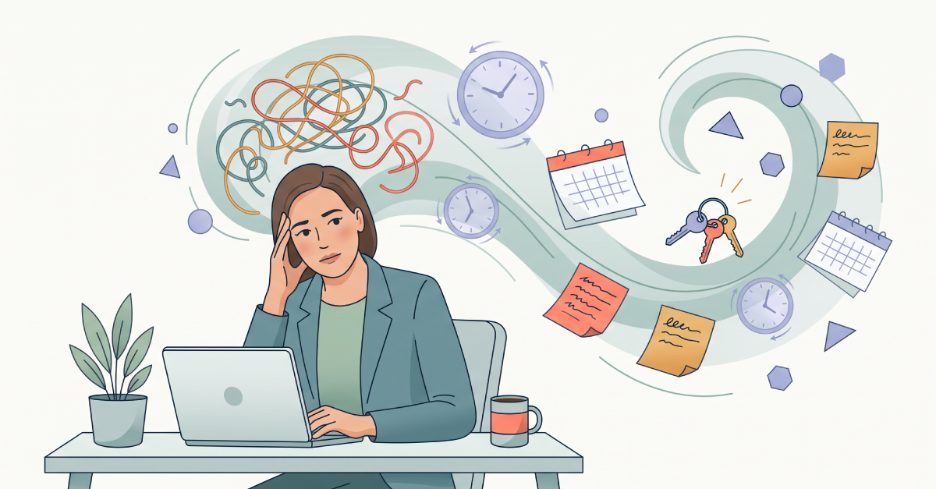
You may spend years wondering why everyday tasks seem harder than they should. Missed deadlines, forgotten appointments, unfinished projects, or difficulty staying organized can gradually shape how you see yourself, especially when the reasons behind these experiences remain unclear.
Living with undiagnosed ADHD can extend beyond attention and organization. Ongoing difficulties may influence your confidence in your abilities, relationships, and everyday responsibilities, while adapting your routines can take considerable effort.
Recognizing the connection between ADHD and these experiences can offer a new way to understand long-standing struggles. You can begin to recognize how attention and executive function challenges may shape your daily experiences and explore strategies that fit the way you work and manage responsibilities. That understanding can also help you identify when professional assessment or additional support may be useful.
The following sections explore the psychological and emotional effects of living with undiagnosed ADHD and how an ADHD diagnosis can bring greater clarity and access to support.
Table of Contents
1. Unexplained Difficulties Can Fuel Self-Blame
Undiagnosed ADHD in adults can make everyday difficulties feel like personal shortcomings. Forgetting responsibilities, putting off tasks, losing important items, or struggling to stay organized may lead you to question your discipline, reliability, or ability to manage daily life.
Without an explanation for these difficulties, you may assume you simply need to try harder or become more organized. Even when you put in extra effort, similar struggles may continue, which can gradually affect how you view your abilities.
Over time, repeated self-criticism can shape your self-esteem. Understanding that certain difficulties may have an underlying cause can help you separate those challenges from your sense of personal worth.
2. Masking ADHD Symptoms Can Add to Daily Emotional Strain
Coping strategies can help you stay on top of ADHD-related difficulties and keep daily responsibilities on track. You may rely on reminders, strict routines, extra preparation, or last-minute bursts of effort, while a structured environment, strong academic skills, or support from others can make certain difficulties less noticeable.
As responsibilities grow, maintaining these strategies may require more time and mental energy. Meetings, appointments, bills, household tasks, and changing priorities can create a steady stream of demands, leaving you with considerable effort behind the scenes even when you appear organized from the outside.
Over time, these daily demands can affect your emotional well-being. You may feel discouraged when your efforts do not produce the consistency you expect, while routines related to sleep, meals, exercise, and other areas of daily life may also require extra attention.
Understanding how much energy goes into keeping everyday responsibilities on track can provide useful context for the emotional toll of undiagnosed ADHD.
3. ADHD Difficulties Can Strain Relationships and Self-Confidence
Forgetfulness, interruptions, impulsive comments, or difficulty following through can affect close relationships. A missed plan or forgotten responsibility may seem small, but repeated situations can create misunderstandings between you and the people around you.
Without an explanation, you may interpret these moments as signs that you are unreliable or that you are letting others down. Someone close to you may also have difficulty understanding why certain behaviors keep happening.
Recognizing the role that attention, organization, or impulse control may play can provide a more useful starting point for addressing recurring concerns. Greater awareness can also help you discuss specific difficulties more openly and find practical ways to support communication.
4. Ongoing Challenges Can Affect Confidence at Work
Work can place constant demands on attention, organization, planning, and time management. Meetings, deadlines, emails, paperwork, large projects, and changing priorities may require you to manage several types of information at once.
Repeated difficulty with these demands can affect professional confidence. You may have the skills to complete a task while finding it harder to start, organize the steps, decide what to prioritize, or finish it on time.
Over time, these experiences may influence how you judge your own abilities at work. Seeing similar difficulties across your professional and personal life can also provide useful information to discuss with a qualified professional when considering an ADHD assessment.
Why ADHD Can Go Undiagnosed for Years
ADHD can remain unrecognized when everyday difficulties appear as separate habits rather than part of a consistent pattern. You may develop routines, reminders, or other ways to stay on top of responsibilities, allowing you to manage daily demands while putting considerable effort into the process.
Earlier environments can also provide structure that makes these difficulties easier to manage. School routines, family support, clear expectations, or strong academic abilities may help you function well while requiring significant effort behind the scenes.
As adult life becomes more complex, the number of responsibilities you manage can increase. Career demands, relationships, finances, parenting, and household tasks can require greater planning and organization, making long-standing attention difficulties more noticeable.
ADHD can also be under-recognized in females, which can contribute to later identification. Symptoms such as inattentiveness, forgetfulness, and internal difficulties may receive less attention than more visible hyperactivity, making recognition more complex for some women.
ADHD Diagnosis Can Bring Clarity and Support
A professional assessment can help determine whether long-standing difficulties with attention, organization, impulse control, or activity are consistent with ADHD or another condition. Because concentration can also be affected by sleep disorders, anxiety, depression, substance use, and some medical conditions, an assessment considers your developmental history, symptoms across settings, and daily functioning.
Online questionnaires can highlight areas worth discussing, but they cannot establish an ADHD diagnosis themselves. A qualified professional can also consider coexisting conditions before recommending an appropriate approach.
A ADHD diagnosis can provide a clearer framework for understanding experiences that have shaped your daily life for years. Support may include education, organizational strategies, environmental changes, psychological interventions, and medication when appropriate, along with practical tools such as reminders, structured routines, and breaking larger tasks into smaller steps.
Bottom Line
Undiagnosed ADHD can shape how you view yourself, relate to others, and approach everyday responsibilities. Over time, the effort required to stay organized and meet expectations can also affect emotional well-being and confidence.
Understanding the connection between these experiences can provide a useful context and encourage you to explore professional assessment when appropriate. A qualified professional can help clarify whether ADHD or another condition may be contributing and identify support that fits your needs.