

Table of Contents
Key Takeaways
-
Choose a level, visible game area with room for players, spectators, and safe walking paths.
-
Check weather, daylight, local rules, and site conditions before guests arrive.
-
Use flexible games that work for children, adults, beginners, and competitive players.
-
Keep active play well away from firearms, ammunition, knives, fuel, vehicles, and campfires.
-
Secure food, collect trash, and respect the land, wildlife, and nearby visitors.
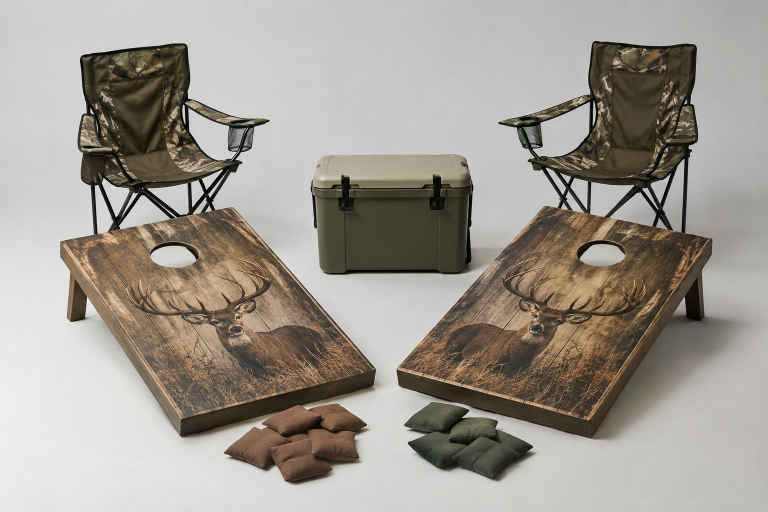
An outdoor game day can give a hunting camp, family camping trip, or weekend gathering an easy rhythm. A few low-pressure activities create chances to talk, laugh, and include people who may not be hiking, fishing, or participating in a hunt. Equipment such as hunting cornhole boards can fit naturally into a hunting or camping themed setup while keeping the focus on shared time outdoors.
The best plan is usually the simplest one: choose a safe space, bring games that are easy to learn, prepare for changing conditions, and leave plenty of room for breaks. Thoughtful boundaries also keep play separate from cooking, vehicles, tools, fire rings, and any hunting equipment.
Why Outdoor Game Days Work So Well
Games give a group something to do without requiring everyone to follow a rigid itinerary. They fill the quiet time before meals, provide a break after a hike, and offer an alternative for guests who prefer to stay near camp. A short round of tossing, trivia, or a scavenger hunt can also help new guests feel included without putting them on the spot.
Keep the mood casual. Instead of scheduling a serious tournament, set out one or two activities and invite people to join when they are ready. Short rounds make it easier to rotate teams, pause for conversation, and accommodate guests with different energy levels.
Pick the Right Location
A good game area starts with firm, reasonably level ground. Walk the space before setting up. Look for roots, holes, loose rocks, slippery patches, tent stakes, and other tripping hazards. Leave a clear buffer between the game area and roads, shorelines, steep slopes, cooking stations, and campsites.
Location Checklist
-
Level ground with clear lanes for throwing, walking, and retrieving equipment.
-
Enough open space that players do not crowd spectators or seating.
-
Shade, a canopy, or a nearby sheltered area for rest breaks.
-
Clear separation from vehicles, fuel, tools, firearms, and fire rings.
-
Good visibility so adults can easily keep an eye on children.
Plan Around Weather and Daylight
Check the forecast and local alerts shortly before leaving home, then reassess conditions when you arrive. Wind can affect toss games, rain can make footing poor, and heat can make an active afternoon less enjoyable. Plan the most energetic activities for a comfortable part of the day, and keep a simple backup option, such as trivia or card games under shelter.
Pack drinking water, sunscreen, insect repellent, dry clothing, towels, layers, and portable lighting. The National Park Service recommends checking conditions, regulations, fire restrictions, food-storage requirements, and group limits before a camping trip, all of which can affect an outdoor gathering.
Build a Simple Game Schedule
A loose schedule helps the day move along while still feeling relaxed. Give guests time to arrive, settle in, and learn the rules before starting any team play. Avoid long brackets that leave some people waiting on the sidelines.
Sample Schedule
-
Arrival: Set out chairs, water, snacks, scorecards, and game equipment.
-
Warm-up: Let everyone try a few practice throws or easy challenges.
-
Team play: Pair experienced players with beginners or younger guests.
-
Meal break: Pause games and keep play away from food preparation.
-
Family round: Use shorter turns, larger targets, or simplified scoring.
-
Final challenge: End with a lighthearted round and simple bragging rights.
Choose Games for Mixed-Age Groups
Choose activities with rules that can be explained in less than a minute. Target-toss games, ring toss, bucket toss, lawn relays, and outdoor trivia all work well because they can be adapted to the available space. For a nature scavenger hunt, make the goal observation rather than collection. Guests can spot a pine cone, animal track, bird call, or type of leaf without disturbing plants or wildlife.
Flexible scoring makes games more welcoming. Move the throwing line closer for children, offer seated turns when needed, or assign a scorekeeper and team captain role to guests who would rather not play physically.
Keep Safety at the Center
Establish the game boundary before the first round begins. Firearms should be unloaded, secured, and stored according to applicable laws and responsible handling practices, never left in or near the play area. Keep knives, axes, fuel, generators, vehicles, and active fires outside the game zone.
Point out where guests can find drinking water, first-aid supplies, restrooms, phones, and the route back to vehicles. If children are present, make sure they know which areas are off limits and who to ask for help.
Protect Food From Heat and Wildlife
Food management supports a cleaner, calmer campsite. Keep meals and snacks in sealed containers or coolers, clean spills promptly, and place trash in secure receptacles or pack it out as required. Do not leave food scraps near tents, seating, or game equipment. Guidance on storing food and trash securely can help campers reduce the chance of attracting wildlife to their site.
-
Keep coolers closed when they are not in use.
-
Secure pet food along with human food.
-
Follow site-specific food-storage rules.
-
Never feed wildlife, even from a distance.
Make the Event Comfortable for Everyone
Comfort matters more than competition. Place folding chairs near the game area, offer shaded rest spots, and keep a quieter space available for guests who want to talk rather than play. Larger targets, lighter equipment, shorter distances, and flexible teams can make participation easier for a wider range of ages and abilities.
Pack a Practical Outdoor Kit
-
Drinking water, cups, and electrolyte drinks if desired.
-
A first-aid kit, sunscreen, insect repellent, and hand sanitizer.
-
Weather-appropriate layers, extra towels, and rain protection.
-
Trash bags, paper towels, sealed food containers, and cooler ice.
-
Flashlights or headlamps, spare batteries, and charged phones.
-
Game markers, measuring tape, pencils, scorecards, blankets, and chairs.
Respect the Land and Local Rules
Review the rules for the park, campground, private property, or wildlife area before making plans. Regulations may address fires, noise, alcohol, pets, vehicle access, firearms, group size, and trash disposal. Stay on approved paths, avoid sensitive vegetation, and keep noise at a level that respects nearby campers and wildlife.
Close the Day With a Simple Cleanup Plan
Before anyone leaves, return game pieces to their bags, collect trash, check the ground for small items, and secure remaining food. If a fire was used, follow the site’s rules for extinguishing it. Finish with a quick head count and a final sweep of the area so that equipment, personal belongings, and waste do not get left behind.
Conclusion
A memorable outdoor game day does not need an elaborate setup. A safe location, a few approachable games, practical supplies, and respect for the land can turn a hunting camp or family outing into a relaxed event that people will want to repeat.