

Opening a custom cabinet showroom can be an attractive business opportunity for entrepreneurs, retailers, and investors who want to enter the growing home-furnishing market. Unlike a general furniture store, a specialized showroom allows customers to experience cabinetry through physical displays, material samples, functional demonstrations, and professional design consultations before making a high-value purchase.
A successful showroom, however, requires more than renting a retail space and filling it with cabinets. Investors need to evaluate the local market, select the right cabinet brands, plan the showroom carefully, establish a reliable supply chain, build a sales process, and manage the costs of inventory, staffing, marketing, and installation.
This guide explains the key steps involved in opening a custom cabinet showroom and how to build a model that can generate sustainable sales.
Table of Contents
Why Open a Custom Cabinet Showroom?
A custom cabinet showroom gives customers something that online shopping cannot fully provide: a physical experience of the product. Buyers can open doors and drawers, compare finishes, inspect hardware, evaluate storage solutions, and discuss their project with a professional designer.
The showroom model is particularly suitable for kitchens, wardrobes, bathrooms, and whole-home furnishing projects because customers often need help translating measurements and lifestyle requirements into a finished design.
For investors, another advantage is the opportunity to increase the value of each customer relationship. A kitchen cabinet inquiry can potentially expand into wardrobes, bathroom vanities, interior doors, wall panels, countertops, and other furniture products.
1. Research the Local Cabinet Market
Market research should be the first step before signing a lease or purchasing showroom displays.
Analyze the following factors:
- Target customers: homeowners, property investors, contractors, builders, designers, or developers.
- Housing activity: new construction, renovations, remodeling, and property development.
- Average project value: determine whether customers typically purchase entry-level, mid-range, or premium cabinetry.
- Local competitors: identify independent retailers, kitchen studios, franchise dealers, and large furniture chains.
- Customer preferences: evaluate popular cabinet styles, colors, materials, storage configurations, and price points.
- Service gaps: look for weaknesses in competitors’ design service, lead times, product selection, installation, or after-sales support.
Location matters as much as the size of the market. A showroom near residential development, design districts, construction suppliers, or complementary home-improvement businesses may have better exposure to qualified customers than a cheaper location with limited relevant traffic.
2. Define Your Custom Cabinet Business Model
Before selecting products, decide how the business will make money.
A custom cabinet business can operate through several models:
Retail showroom
The showroom sells directly to homeowners and renovation customers. This model can generate strong project margins but requires investment in sales staff, design services, displays, and customer acquisition.
Trade-focused showroom
The business primarily serves contractors, builders, architects, and interior designers. Repeat professional customers can create a more predictable pipeline of projects.
Dealer or franchise model
An investor partners with an established manufacturer or brand. The manufacturer may provide products, training, design systems, marketing resources, and operational support, reducing some of the challenges associated with building an independent brand.
Hybrid model
A hybrid showroom serves homeowners while developing relationships with contractors, designers, developers, and property investors. For many markets, this approach provides a useful balance between direct retail sales and B2B opportunities.
The best model depends on local demand, available capital, professional experience, and the level of support available from suppliers.
3. Select the Right Cabinet Brands
Choosing suppliers is one of the most important decisions when opening a custom cabinet showroom.
Do not evaluate cabinet brands based only on product appearance or wholesale price. Assess the complete commercial proposition, including:
- Product quality and material options
- Customization capabilities
- Cabinet styles and color selections
- Hardware and accessory options
- Manufacturing capacity
- Minimum order requirements
- Wholesale pricing and dealer discounts
- Lead times
- Warranty terms
- Installation support
- Design software
- Marketing assistance
- Training programs
- Sample and showroom support
A strong supplier should help you sell rather than simply ship products. Design tools, technical training, marketing materials, product catalogs, and project support can significantly reduce the operational burden for a new showroom.
4. Choose the Right Showroom Location and Size
A cabinet showroom does not necessarily need to occupy a massive retail space. The objective is to create enough displays to demonstrate the product range while maintaining a professional customer experience.
When evaluating locations, consider:
- Visibility from major roads
- Parking availability
- Accessibility for contractors and homeowners
- Proximity to residential communities
- Nearby interior-design and construction businesses
- Local commercial rent
- Space for product displays
- Storage requirements
- Areas for design consultations
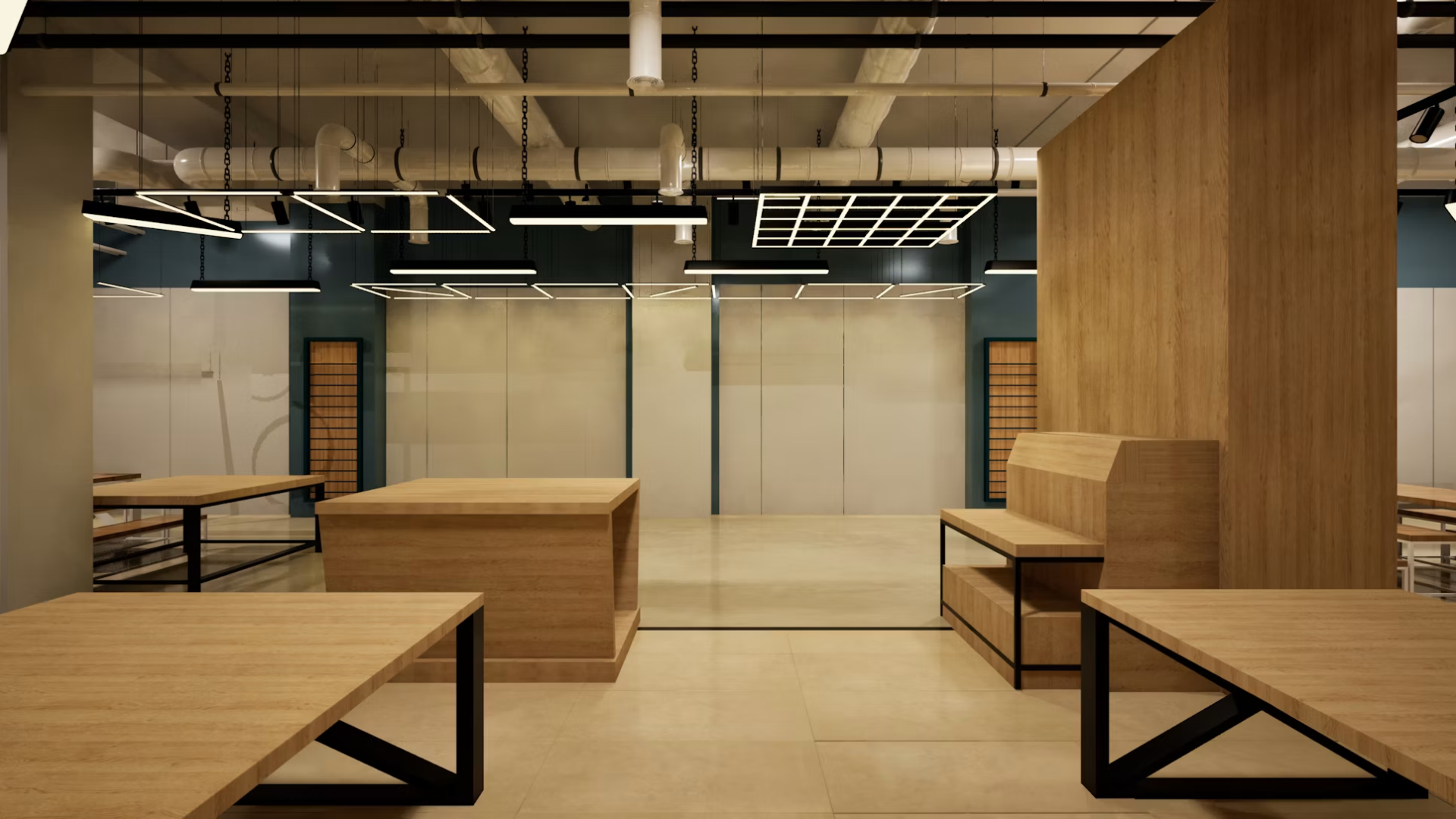
A well-planned showroom should demonstrate complete applications rather than simply displaying rows of cabinet doors.
For example, one display can present a complete modern kitchen, another can demonstrate a walk-in wardrobe, and another can showcase a bathroom vanity. This helps customers visualize how individual products work within a finished interior.
5. Design the Showroom Around Customer Decisions
The showroom layout should support the customer’s purchasing journey.
A practical layout can include:
- Welcome area – introduce the brand and major product categories.
- Kitchen displays – demonstrate different layouts, finishes, storage systems, and hardware.
- Wardrobe displays – show fitted storage, open wardrobes, accessories, and organization solutions.
- Bathroom display – demonstrate vanity configurations and coordinated finishes.
- Material library – provide doors, panels, countertops, handles, and color samples.
- Design consultation area – allow customers to review drawings, quotations, and 3D designs.
- Technical area – provide information about installation, materials, warranty, and project delivery.
The showroom should answer common purchasing questions without requiring a salesperson to explain every basic feature.
6. Calculate Your Startup Costs
The initial investment for a custom cabinet showroom varies substantially by country, location, showroom size, product positioning, and business model.
Typical startup expenses include:
| Cost Category | What It Covers |
| Lease and deposit | Commercial rent and initial deposit |
| Renovation | Flooring, lighting, walls, ceiling, and electrical work |
| Displays | Kitchen, wardrobe, bathroom, and other product displays |
| Samples | Door panels, materials, colors, countertops, and hardware |
| Technology | Computers, design software, screens, and measurement equipment |
| Staffing | Designers, salespeople, and administrative personnel |
| Marketing | Website, local marketing, events, and promotional materials |
| Inventory | Samples, accessories, and selected products |
| Working capital | Operating expenses before sales stabilize |
Investors should maintain sufficient working capital rather than allocating the entire budget to showroom decoration. A visually impressive showroom cannot compensate for insufficient cash flow during the early months.
7. Build a Professional Sales and Design Process
Custom cabinetry is a consultative sale. Customers usually need assistance with measurements, layouts, materials, budgets, and installation.
A structured sales process can include:
Lead → Qualification → Site Measurement → Design → Revision → Quotation → Contract → Production → Installation → After-Sales Service
The most important objective is to move customers efficiently from inspiration to a clear project proposal.
Technology can improve this process. AI-powered design and quotation tools can help sales teams produce preliminary concepts faster, while digital project management systems can reduce communication errors between the showroom, manufacturer, installer, and customer.
For new investors, supplier-provided training can also shorten the learning curve for sales staff and designers.
8. Develop Multiple Customer Acquisition Channels
A showroom should not depend exclusively on walk-in traffic.
An effective customer acquisition strategy can combine:
- Local SEO and Google Business visibility
- A professional showroom website
- Search engine content
- Social media
- Home renovation events
- Contractor partnerships
- Interior designer referrals
- Builder relationships
- Property developer partnerships
- Customer referrals
- Email and CRM follow-up
B2B relationships are particularly valuable because contractors, builders, and designers can generate multiple projects rather than a single residential order.
Your marketing should also showcase completed projects. High-quality project photography, floor plans, before-and-after examples, and customer testimonials provide stronger evidence of capability than generic product advertisements.
9. Understand the Economics Before Launching
A showroom should be evaluated as a business system rather than simply a retail store.
Key metrics include:
- Monthly qualified leads
- Consultation-to-design conversion rate
- Design-to-order conversion rate
- Average project value
- Gross margin
- Customer acquisition cost
- Repeat and referral sales
- Installation revenue
- Monthly fixed costs
- Break-even sales volume
For example, if monthly fixed operating expenses are $30,000 and the average gross contribution per project is $5,000, the business needs approximately six equivalent projects per month to cover those fixed costs before considering taxes and other factors.
The actual calculation will vary according to local margins and operating expenses, but the principle is important: know how many projects the showroom must close each month before investing in the location.
10. Consider a Manufacturer-Supported Dealership
For first-time investors, partnering with an established manufacturer can reduce some of the complexity of launching an independent cabinet business.
A manufacturer-supported dealership may provide access to established products, dealer pricing, showroom guidance, training, design technology, marketing resources, technical assistance, and project leads.
OPPOLIA is a fast-growing custom cabinetry and whole-home furnishing brand from China, offering investors an opportunity to enter the home-furnishing market with a flexible investment model.
As an OPPOLIA dealer, investors can benefit from showroom support, professional sales training, AI-powered design tools, and access to local project leads. The product portfolio can also support a broader whole-home business model covering kitchens, wardrobes, bathrooms, doors, windows, wall panels, countertops, and furniture.
For entrepreneurs comparing independent retail with a manufacturer-supported model, the key question is not simply how much the showroom costs. It is how much operational infrastructure the supplier can provide after the showroom opens.
Common Mistakes to Avoid
Several mistakes can undermine an otherwise promising showroom investment:
- Choosing a location based only on low rent
- Displaying too many products without a clear customer journey
- Selecting suppliers based only on the lowest price
- Underestimating working-capital requirements
- Hiring salespeople without product and design training
- Ignoring contractor and designer relationships
- Failing to track lead-to-sale conversion
- Promising unrealistic delivery times
- Offering customization without reliable technical support
- Spending heavily on the showroom while underinvesting in marketing and sales
A successful showroom balances product presentation, customer service, operational reliability, and financial discipline.
Is Opening a Custom Cabinet Showroom a Good Investment?
Opening a custom cabinet showroom can be a viable investment when the local market has sufficient renovation or new-construction demand, and the business has a clear competitive advantage.
The strongest opportunities generally combine four elements: a differentiated product portfolio, competitive supplier economics, professional design and sales services, and consistent lead generation.
For new entrepreneurs, the biggest challenge is often not selling cabinets; it is building all the infrastructure required to sell, design, order, install, and support custom projects. This is why a manufacturer-supported dealership can be an attractive alternative to starting completely from scratch.