

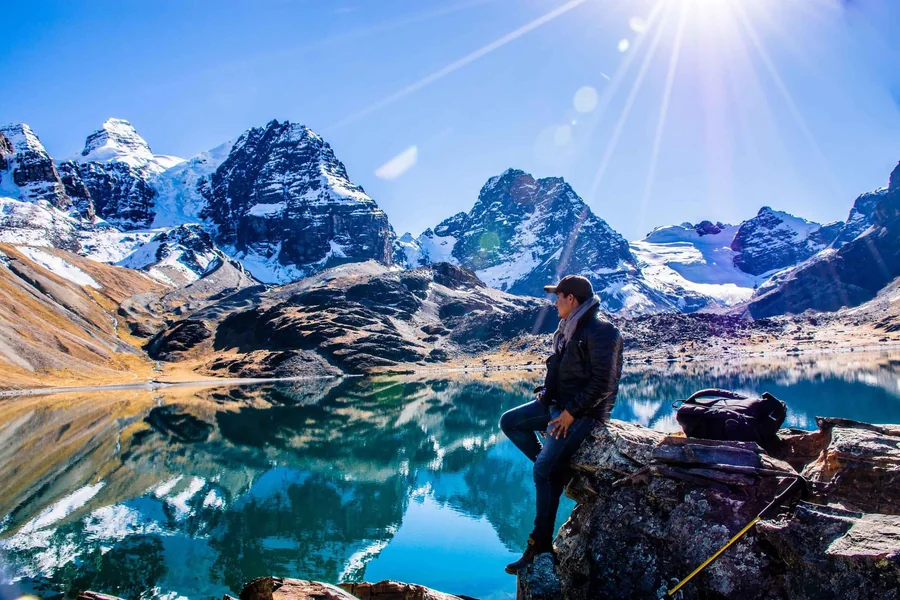
Bolivia is among the most rewarding destinations of South America. It has mountainous sceneries that are dramatic, colorful markets, old ruins and some of the natural wonders in the world. The 3 week Bolivia itinerary would help you to have sufficient time to visit those well-known places and other lesser-known areas without any haste.
Three weeks will be enough time to adapt to the high altitude of the country, have adequate time in every destination and have long bus journeys without the need to lose key experiences. The bustling streets of La Paz to the vast white expanse of the salt flats of Uyuni and the wildlife haven of the Amazon in Rurrenabaque all leave the same impression as each is uniquely different.
This guide is planned to take a more real-world approach into the route thereby reducing the amount of backtracking, allowing you time to experience the distinct culture, culinary foods, and landscape of Bolivia.
Table of Contents
Week 1: La Paz, Copacabana, and Lake Titicaca
On your path, you start with La Paz, the highest administrative capital of the world. It is situated at an elevation of more than 3,600 above sea level; so, you must slow things down on the first day. Hydrate yourself with a lot of water, have some coca tea (but not too much) and do not overwork your body until it gets used to it.
When you begin to amble around the neighborhoods of La Paz, you soon get to know its personality. The popularized cable car or Mi Teleférico is a transport system that offers unbelievable panoramas of the valley and yet is simple and cheap to use. The colorful markets, colonial features and street food make the city experience an exciting atmosphere all morning into the night.
One of the most intriguing locations in the city is the Witches Market. Native Herbs Traditional Bolivian vendors sell herbs, textiles, handcrafted items, and ceremonial items that show the Bolivian Indigenous heritage. Plaza Murillo is close by, and contains historic buildings and an opportunity to observe daily life in town.
In case you are in need of adventure, you may want to join the well known Death Road cycling tour. The highway has significantly enhanced safety but the road continues to provide spectacular mountain scenery and is one of the most well known activities in Bolivia.
Having spent some days at La Paz, proceed to the Lake Titicaca, to Copacabana, on the banks. It is a long trip of several hours but with the calm scenery of the lakeside, it is well worth the waiting. The town is much slower than La Paz and is thus a nice place to unwind.
Hit the boat to Isla del Sol with stunning hiking paths, antique Inca ruins and stunning lake scenery. A night in the island will enable you to appreciate magnificent sunsets and serene mornings prior to having to visit the mainland.
Week 2: Sucre, Potosí, and Uyuni
Abandoning Lake Titicaca, head south towards Sucre, the constitutional capital of Bolivia. Calling itself the White City, Sucre boasts of beautiful colonial architecture, welcoming weather and a laid-back feel that will be contrasting the other busier cities you have already been to.
Sucre is perfect in decelerating. Explore its whitish streets, local cafes and spend time in Plaza 25 de Mayo where local people hang around during the day. The museums of the city offer understanding of the history of Bolivia, and the adjacent outlooks give beautiful panoramas.
It is not far out of town before you get to Cal Orcko, where you can still see thousands of the actual footprints of dinosaurs in the wall of a big limestone deposit. It is a phenomenal paleontological site in the world.
Depart Sucre, and proceed to Potosí, one of the highest cities in South America. Potosí was a very important place during Spanish colonial times due to large amounts of silver deposits contained within Cerro Rico.
Touring the mines is a strong insight into the history of Bolivia and the hardships many miners continue to endure. It may be an emotional experience, but it gives great insight into the history and modern day of the country.
The colonial streets and churches of the city and the old buildings also should be taken care of before moving on to Uyuni.
The Uyuni Salt Flats are next on the list of Bolivia trip highlights. Majority of the travelers do want to go on a three-day tour; this will be the fullest experience.
The initial day explains the infinite white salt flats. The cracked salt designs extend to the horizon in the dry season, forming popular perspective photographs. When it rains, a shallow pool of water would convert the flats into a massive mirror as it reflected the sky.
The adventure goes on into colorful lagoons that boast of flamingos, volcanic intoxicating regions, geysers in steam, strange formations of rocks. Each day is different and the varied landscapes and surroundings make the long commutes amazing.
At the close of the tour you will be on the southern Bolivian border, where most of the visitors proceed into Chile. In this itinerary, though, you will be going back to the interior of Bolivia during the last week.
Week 3: Rurrenabaque and the Bolivian Amazon
The last week takes a huge turn as the icy mountainous scenery is replaced by a tropical forest. By air or by long distance bus, travel to Rurrenabaque, according to your budget and time schedule.
Rurrenabaq is the entry point of Bolivian Amazon where two unique experiences can be experienced.
The Pampas tours are based on wildlife viewing. Rafting and rowing through small rivers bring you close to capybaras, caimans, pink river dolphins, monkeys and a myriad of bird species. The wide vistas and make animal sightings fairly straightforward, and provide the best opportunities of photography.
Madidi National Park is of a different experience. You are shrouded by high-density rainforest and accompanied by local guides who describe medicinal plants, wild animals and indigenous culture relating to the forest. Jogging through the forest is an entirely new experience to what you have had previously in the trip.
Most people take a three day trip to either the Pampas or Madidi though the trip combining the Pampas and the Madidi is even more fulfilling as long one has the time.
On re-entering Rurrenabaque, spend the last few days in La Paz before leaving.
Budget, Transportation, and Practical Tips
Bolivia is among the cheapest nations in South America hence appealing to tourists who seek to have unforgettable experiences without necessarily investing a lot of money.
The accommodation options include the cheapest hostels and the most comfortable boutique hotels. Even the rooms in the form of a private are usually affordable when compared with the adjacent countries.
Another place of interest of traveling in Bolivia is food. Common meals consist of soup, rice, potatoes, and meat which serve plentiful servings at affordable prices. Salteñas are well-known baked pastries of Bolivia, stuffed with meat, and vegetables, which are good breakfast or snacks.
The nature of transportation in Bolivia is patient as the mountainous terrain of Bolivia makes most of the bus travels take longer than anticipated. Overnight buses assist in saving on accommodation expenses whilst traveling over long distances.
The longer routes such as La Paz to Rurrenabaque, where a one-day-long trip can take place on the road, make the flights valuable.
The altitude is a serious thing to consider during the trip. The numerous sites are located above 3,000 meters and thus, a slow acclimatization will make altitude sickness a non issue. Spending time drinking water, taking breaks when necessary and not taking exceeding alcohol can be of great help within the first few days.
Climate varies significantly between locations and thus bring some clothing to be easy to put on. High-altitude mornings and nights would be covered with warm jackets and lightweight clothes would be effective in the wet climate of the Amazon.
Final Thought
This is a 3 week Bolivia itinerary that is all about adventure, or rest. Three weeks will be sufficient to explore the amazing diversity of Bolivia without the necessity to hurry up at all times.
The tour is a mix of colorful cities, tranquil lakes, colonial past, splendid salt marsh, and rainforests, which makes it a journey that may be remembered forever. The country turns out to be surprisingly diverse, as each of the destinations is entirely different.
You can be admiring sunrise over the Uyuni Salt Flats, hiking up Isla del Sol, riding cable cars over La Paz or seeing pink river dolphins in the Amazon, Bolivia leaves memories that linger long after you have gone home.
FAQs
How many days are enough for Bolivia?
Three weeks is ideal because it allows enough time for altitude adjustment, long-distance travel, and visits to the country’s most famous destinations without rushing.
Is Bolivia expensive for travelers?
No. Bolivia is one of the most budget-friendly countries in South America, with affordable accommodation, transportation, and food.
When is the best time to follow a 3 week Bolivia itinerary?
The dry season from May to October offers clearer skies and easier travel, while the rainy season creates the famous mirror effect on the Uyuni Salt Flats.
Do I need to worry about altitude sickness?
Yes. Cities like La Paz and Potosí are at high elevations, so spending your first days resting and staying hydrated helps your body adjust.
Is the Uyuni Salt Flats tour worth three days?
Yes. A three-day tour includes not only the salt flats but also colorful lagoons, geysers, volcanoes, and unique desert landscapes.
Can I visit the Amazon during the same Bolivia trip?
Absolutely. Rurrenabaque provides easy access to both Pampas wildlife tours and Madidi National Park, making it an excellent addition to a three-week itinerary.
Is public transportation reliable in Bolivia?
Long-distance buses connect most major destinations, although travel times can be longer than expected because of mountainous roads. Flights are available for some longer routes to save time.