

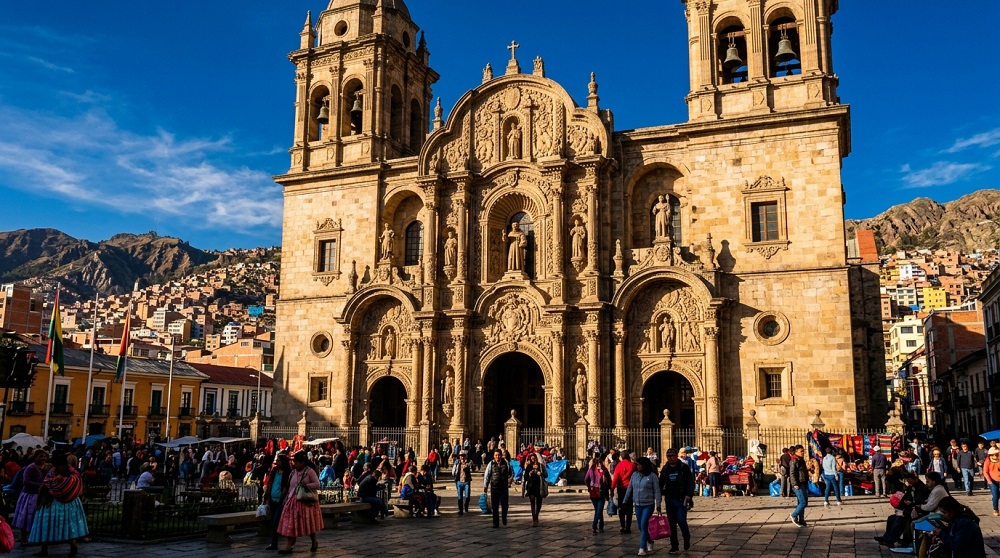
La Paz is set in a canyon, pouring out from approximately 3,200 metres in the rich south, to 4,100 metres at the canyon’s rim. The end of the valley is closed with the mass of Illimani covered with snow. There’s no flat in the city, so your first two days are influenced by altitude, whether you’re going for or against it.
Be sure to ride the Cable Cars.Don’t miss the Cable Cars.
The Mi Teleférico is the longest urban cable car system in the world, not for tourism but for public transport. Pocket change is the price of a ride. The red line heads to El Alto for the view back over the canyon, the yellow line goes through the highest elevation, and the green line goes down to the leafy Zona Sur. The best way to orient yourself will be to ride several lines in the afternoon.
Table of Contents
The Historic Centre
Calle Jaén
Old colonial street of ochre walls and heavy doors with four tiny museums in a single block, including musical instruments, precious metals and city history.
Plaza Murillo
The Congress clock, which was put up as a statement of “thinking differently” in the southern hemisphere, pigeons and government buildings.
Mercado de las Brujas
The Witches’ Market where the yatiri healers sell herbs, amulets, ekeko good-fortune figures and dried foetuses of llamas which are buried under new buildings as a tribute to Pachamama. Browse respectfully, it’s a working market, not a novelty for ritual use by the Aymara.
El Alto
Feria 16 de Julio
It is open on Thursdays and Sundays, and one of the biggest open air markets in South America. Parts of cars, animal feed and livestock for dozens of blocks.
The Cholets
The mansions of architect Freddy Mamani, designed by what were new and wealthy Aymara families, paint El Alto in electric colour and in Andean geometric patterns. There is nothing like them in Latin America.
Cholita Wrestling
Sunday afternoons when Aymara women wear bowler hats and multi-layered skirts and enact theatrical duels. Touristed but with a local entertainment flavor.
Beyond the City
A short drive (30 minutes) south is the Valle de la Luna where one can find eroded clay spires and short walking loops. From Zona Sur a half day hike to Muela del Diablo. The abandoned ski resort of Chacaltaya (5,400 metres) is accessible from the road (after a few days of high altitude).
North Yungas “Death Road” mountain bike track comes down 3,500 metres in one day. It’s the city’s defining adventure and the safety record is entirely up to the operator; remember it’s worth looking at the equipment, guide ratio and recent reviews before price.
Eating and Drinking
Local institution, salteñas, juicy baked pastries eaten mid-morning – lean forward. Have api con pastel in the morning, anticuchos from late night street barbecue and pique macho when hungry. The national drink is the grape drink called singani. The city of La Paz is also home to an important fine-dining trend, featuring Bolivian ingredients.
Practical Tips
Altitude First
On arrival, rest, drink water, eat lightly and abstain from alcohol for a day or two. A local remedy and it is readily available is mate de coca. If the headache or breathlessness at rest persists then it is descending.
The following are a few helpful tips for getting around and staying safe:
Call rather than flag cars out for hire to be used as radio taxis. Valuables should be out of sight in busy markets and be alert to anyone in plain clothing who identifies as police.
Timing
From May to October there is little rain and clear weather. The nights are cold all year round. Protestors frequently close roads in blockades and this is often done without warning.
Do three days. The latter two will be used to acclimating to the air.