

Most itineraries are built around distance. In Bolivia, altitude sets the order. El Alto International, serving La Paz, sits at roughly 4,060 metres, which means you arrive higher than most European mountain summits and then have to function. Sequence the route around that, and the rest falls into place.
Table of Contents
Build the Route Around Acclimatisation
Two useful options. Fly into La Paz and give yourself two low-effort days before anything demanding — no hiking, no alcohol, plenty of water. Or fly into Sucre at around 2,800 metres, spend two days there, and climb gradually afterwards. The second is gentler but adds a connection.
Either way, don’t schedule the salt flat circuit for your first 48 hours in the country. It climbs above 4,800 metres.
The 7-Day Core
Days 1–2: La Paz
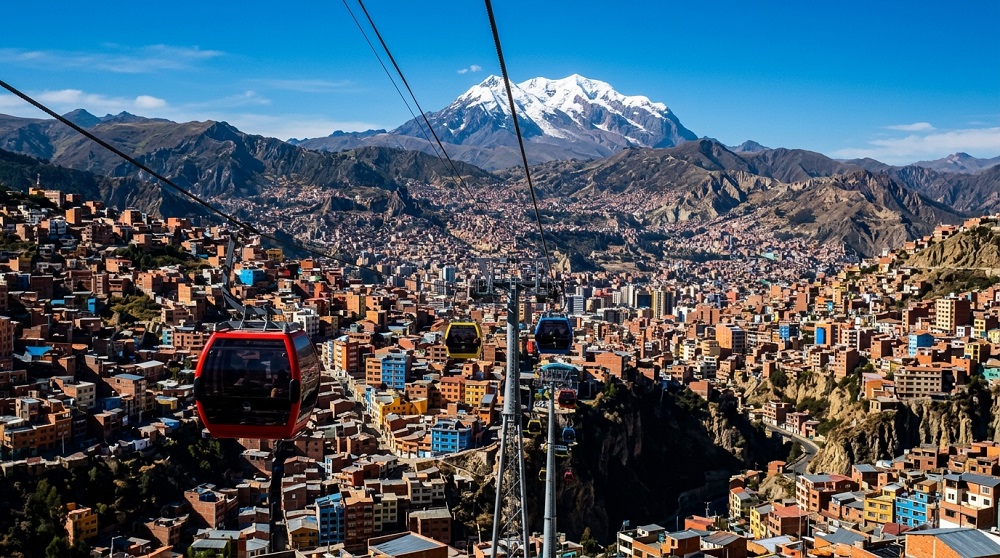
Ride the Mi Teleférico cable car lines for orientation, walk Calle Jaén and the Witches’ Market, and head up to El Alto for the Thursday or Sunday market. Rest between activities.
Day 2 Evening: Travel to Uyuni
An overnight bus takes about ten hours and saves a day. A 50-minute flight costs more and is far more comfortable.
Days 3–5: Salar de Uyuni
The three-day circuit crosses the salt flat, then heads south through the Eduardo Avaroa reserve to the coloured lagoons, geysers, and hot springs, returning to Uyuni on day five.
Day 6: Potosí or Straight to Sucre
Potosí adds the colonial mint and Cerro Rico’s mining history. Skip it if you’d rather have a full extra day in Sucre.
Day 7: Sucre
Whitewashed colonial streets, a mild climate at lower altitude, and the dinosaur trackways at Parque Cretácico. Fly out via La Paz or Santa Cruz.
Extending to 10 Days
Lake Titicaca is the easiest add-on — Copacabana and Isla del Sol sit three to four hours from La Paz, and they slot in before Uyuni while you’re still acclimatising.
Madidi National Park, entered from Rurrenabaque, adds three days of Amazon lowland and a welcome drop in altitude. Flights are short but weather-dependent.
Torotoro National Park, from Cochabamba, offers canyons, caves, and dinosaur footprints with almost no other visitors.
An Alternative Ending
Three-day Uyuni tours can finish at the Chilean border rather than returning, dropping you in San Pedro de Atacama. If Chile or Argentina is next, this saves a full backtrack.
Getting Around
Overnight buses connect the main cities cheaply and comfortably in the better classes. Domestic flights save meaningful time on La Paz–Uyuni, La Paz–Rurrenabaque, and Sucre–Santa Cruz. Book flights ahead, as seats on popular routes are limited.
When to Go
May to October is dry season: clear skies, passable roads, cold nights. December to March brings the salt flat’s mirror effect, along with rain and occasional flooded access routes.
Costs
Bolivia is the cheapest country in South America for travellers. Mid-range travel runs roughly $40 to $70 per person daily. A three-day Uyuni tour typically costs $150 to $250 depending on operator quality — worth paying above the floor here. Carry cash, since ATMs are scarce outside cities.
Build in Slack
Road blockades during protests are routine and can close highways without notice. Never plan to travel overland on the day of an international flight, and leave a buffer night in La Paz or Santa Cruz before departure.
Seven days covers La Paz, the salt flats, and Sucre properly. Ten lets you add altitude relief at the lake or in the jungle.