

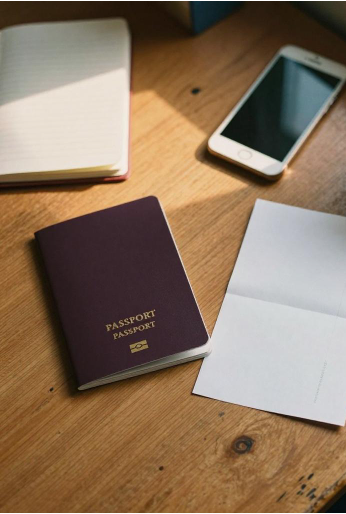
Everyone sells the front of house. The golden hour temple, the night bus that somehow arrived on time, the beach with no one on it. Nobody sells the back office: the sixty-four confirmations, the visa application that requires a document you did not know existed, the hostel that “lost” your booking three weeks before you arrive. Extended travel is not a liberation from administration. It is administration, relocated to somewhere with better light.
The trick, learned the hard way across several borders and one very expensive rebooking, is to treat the inbox as a filing cabinet rather than a to-do list. A filing cabinet does not buzz. It holds things until you need them, in a shape you can find later. Most people’s travel inbox is the opposite: a pile on the floor of a room they keep walking past.
Table of Contents
Setting things up before the plane leaves
The mistake is assuming your home setup survives contact with four months on the road. It does not. Your bank’s fraud algorithm does not understand why your card just appeared in Tbilisi, and your recovery phone number stops working the moment you swap SIM cards in Istanbul.
So the setup happens at home, on home Wi-Fi, with a cup of tea and a bad playlist. Recovery contacts updated. Authenticator apps installed while there is still a stable connection to install them with. A printed page of the essentials, because paper has never needed a firmware update. And then the decision that quietly determines the next four months of sanity: which address is doing the work.
Two addresses, two lives
There is a version of travel where one address handles everything: the flight confirmation, the newsletter you forgot you subscribed to, the twelve booking sites that will now sell your travel inspiration data to a company in Delaware, and the actual emergency when an airline cancels at midnight. That version ends with you searching a flooded inbox at 2am in a laundromat for a booking reference.
The alternative takes twenty minutes. One address for bookings, confirmations, and anything that involves money or a stranger’s reservation system. Another for humans: the family thread, the friend who sends photos, the landlord. The booking address gets typed into forms; the human address does not get typed anywhere, ever again. When something goes wrong, and something always goes wrong in a timezone six hours ahead of the person who can fix it, a dedicated booking email holds nothing but the paper trail, and a paper trail with no noise in it is searchable in seconds rather than minutes.
Behaviour on shared Wi-Fi
Airport Wi-Fi, cafe Wi-Fi, the hotel network named after a football club: none of it is yours, and none of it deserves your trust. The old advice was to fear interception, which modern encryption has largely handled. The subtler problem is what you do on those networks, because they make you sloppy. Checking bank balances on a screen visible to six strangers. Logging into something important while a captive portal serves a login page lookalike.
The habit that fixes most of it is boring: a VPN switched on by default whenever you are on a network you do not control, and a rule that sensitive logins happen on your own connection or not at all. The everyday guidance published by the National Cyber Security Centre covers the rest without the scare tactics. If the alternative is waiting, waiting is usually correct.
The cancellation that is not
Travel phishing is remarkably good now, and remarkably mundane. A message that looks exactly like the airline template: your flight cancelled, a refund waiting, tap here to claim it within 24 hours. It knows your booking number because somebody upstream leaked it, or because it guessed the format and hoped. The urgency is the tell, and so is the sender domain if you bother to expand it, which nobody does at altitude on bad Wi-Fi. The patterns catalogued by the Federal Trade Commission are the same ones wearing a boarding pass.
The rule that survives contact with panic: never act on the message. Act on the app, or on the website you reach by typing the address yourself. If the cancellation is real, it will be in your booking record. Fake hotel closures and fake unpaid visa fees run on the same engine. When the document in question is an entry requirement rather than a refund, check the destination rules directly. The IATA Travel Centre aggregates what governments actually demand, which beats trusting a PDF someone sent you.
Copies that do not need a signal
Mountains, ferries, rural guesthouses with one router and forty guests: the connected world has holes, and they are always where you need coverage most. Offline copies close them. Bookings, insurance certificate, passport page, visa, prescriptions, emergency contacts, exported to a folder that lives on the device itself rather than in a cloud tab you cannot load.
The weekly reset
Long trips blur weeks together, and the inbox blurs with them, until October’s mess is still sitting there in December. Once a week, Sunday evening usually, fifteen minutes with the filing cabinet. Confirmations for places you have already slept in get archived. Refunds confirmed, receipts chased, subscriptions paused that should not be running while you are gone. Anything that has turned into a human conversation moves to the human address and out of the paper trail.
It is not glamorous and it will never make the montage. But the travellers who look effortless on long trips are almost never the ones with the best instincts. They are the ones whose back office runs quietly enough that nobody sees it running. The golden hour looks the same whether or not you can find your return ticket. The difference only shows up at the counter, and at the counter, admin wins every time.