

The best argument for smart home technology isn’t convenience when you’re on the sofa. It’s what happens when you’re 4,000 miles away and can’t remember whether you locked the back door.
A handful of well-chosen devices removes most of the low-grade anxiety of leaving a house empty — and catches problems before they become expensive.
Here’s what’s actually worth installing.
Table of Contents
Start With Water Detection
The Highest-Value Upgrade
Water damage is the most common and costly problem in unoccupied homes, and it announces itself with nothing. A pipe fails on day two and you find out on day fourteen.
Leak sensors are inexpensive and take seconds to place — under sinks, behind the washing machine, near the water heater, beside the boiler. They alert your phone the moment they detect moisture.
Automatic Shut-Off Valves
A significant step up in price, but they close the mains supply automatically when a leak is detected. For anyone travelling frequently or owning an older property, they pay for themselves the first time they work.
Cameras and Doorbells
A video doorbell handles two problems at once: it shows you deliveries and it records anyone approaching the door. Two-way audio lets you answer as though you’re home, which deters casual opportunists.
Indoor cameras are more divisive. If you use them, place them in entry points rather than living spaces, choose a brand with proper encryption, and use strong unique passwords. Local storage options avoid relying entirely on a cloud subscription.
Smart Locks
Remote Verification
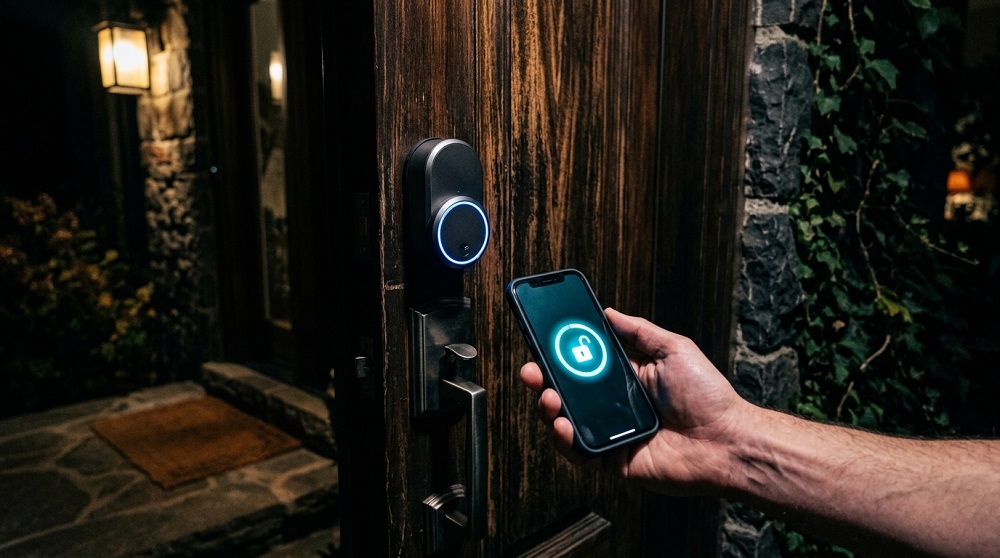
The real benefit is being able to confirm the door is locked, from anywhere, instead of wondering for a fortnight.
Access Without Keys
Temporary codes let a neighbour, pet sitter, or cleaner in without handing over a physical key — and you can see when they came and went, then revoke access when you’re back.
Choose a model with a physical key backup and check the battery before departure.
Lighting That Looks Lived In
Basic timer switches work, but smart bulbs do it better. Randomised schedules avoid the obvious pattern of a lamp clicking on at exactly 7pm every evening.
Vary the rooms across the evening — kitchen, then living room, then a bedroom — to mimic actual movement through the house. Some systems offer a built-in vacation or away mode that handles this automatically.
Thermostats and Climate
A smart thermostat lets you hold a low protective temperature while away and warm the house before you land. In cold climates, temperature sensors that alert you if the house drops toward freezing can prevent burst pipes entirely.
Combined with humidity monitoring, they also catch damp problems developing in unventilated rooms.
Smart Plugs
The cheapest genuinely useful upgrade. They let you cut power to appliances remotely, control lamps, and — with energy monitoring versions — confirm that a device really is off.
Useful for the iron, the coffee machine, and anything else you may have left on. If you’re using energy monitoring plugs to keep an eye on standby power, it’s also worth comparing electricity companies to make sure the baseline rate you’re paying is competitive too.
Practical Setup Advice
- Test everything a week before you leave, not the morning of
- Check batteries in locks, sensors, and cameras
- Make sure alerts reach you — test the notification path on mobile data, not home Wi-Fi
- Consider a router on a smart plug so you can reboot a frozen connection remotely
- Have a backup human with a physical key; technology fails
- Use strong, unique passwords and enable two-factor authentication on every account
What to Buy First
If budget is limited, the order that delivers the most protection per pound is straightforward:
- Water leak sensors
- Video doorbell
- Smart lighting
- Smart thermostat
- Smart lock
The Takeaway
Smart home devices don’t stop things going wrong. They tell you quickly enough to do something about it.
Start with leak sensors and a doorbell. Those two catch the problems that actually cost money.