

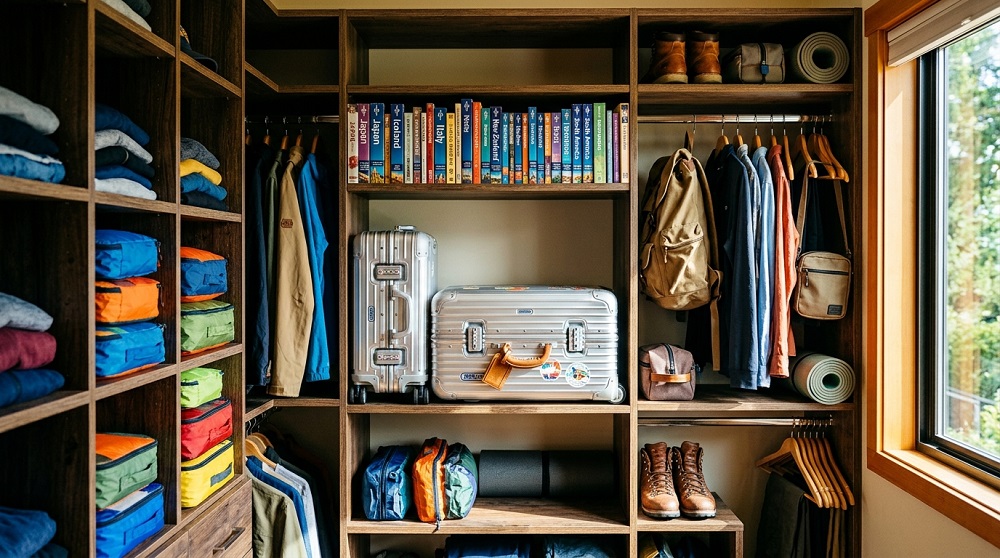
Travel gear has a habit of scattering. The suitcase lives on top of a wardrobe, the adapters are in a kitchen drawer, the neck pillow is behind the sofa, and the packing cubes are still in the bag from last time.
The result is the same every trip: an hour of hunting before you’ve packed a single item. A dedicated travel zone fixes that permanently, and it doesn’t need much space.
Table of Contents
Choose the Right Location
Prioritise Access Over Size
The best spot isn’t the biggest — it’s the one you’ll actually use. A wardrobe shelf you can reach beats a loft hatch you dread.
Good candidates include the bottom of a hall cupboard, a spare room wardrobe, under-stairs storage, or a set of shelves in a utility room.
Keep Everything Together
The whole benefit comes from having one location. Splitting gear across three rooms recreates the original problem.
Gather Everything First
Before organising anything, collect every travel-related item in one pile. Most people are surprised by what turns up — four adapters, three neck pillows, a decade of hotel toiletries.
Sort into three groups:
- Keep: working, used, worth the space
- Replace: broken zips, expired medication, dead power banks
- Remove: duplicates and things you’ve never once used
Be honest at this stage. Storing things you’ll never take is just tidy clutter.
Organise by Category
Luggage
Nest smaller cases inside larger ones to save floor space. Store suitcases upright, and fill them with soft items you don’t need between trips — travel pillows, blankets, packing cubes — so the volume isn’t wasted.
Leave cases slightly open with a dryer sheet or moisture absorber inside to prevent musty smells.
Electronics and Cables
Keep all chargers, adapters, power banks, and cables in one labelled box or pouch. This is the category that causes the most last-minute panic.
Charge power banks every few months so they’re not flat when you need them.
Toiletries and Medication
Maintain a permanently packed toiletry bag with travel-sized essentials that stays ready. Add a small medical kit with painkillers, plasters, and any regular medication.
Check expiry dates twice a year — that’s the whole maintenance requirement.
Documents and Travel Extras
A single folder or box for passports, vaccination records, loyalty cards, and leftover foreign currency. Keep sleep masks, earplugs, compression socks, and laundry bags together in a small container.
Build the Grab-and-Go System
Keep a Standing Packing List
Tape a laminated list inside the cupboard door, or keep a note on your phone. Update it after each trip based on what you missed or never touched.
Create a Ready Bag
Frequent travelers benefit from a small bag that never gets unpacked — toiletries, adapter, charger, medication, eye mask. When a trip comes up, it goes straight in the case.
Label Clearly
Clear containers or simple labels remove all guesswork. Anyone in the household should be able to find the adapters without asking.
Maintain It After Every Trip
The system only works if it resets.
Within 48 hours of returning: unpack fully, wash and return items, restock toiletries and medication, recharge power banks, and note anything that needs replacing.
Twice a year, check expiry dates and battery health, and remove anything that’s quietly become dead weight.
The Takeaway
You don’t need a dedicated room — a single shelf, properly organised, does the job.
One location, sorted by category, with a ready-packed toiletry bag and a standing checklist. Do that once and packing stops being a chore you dread and becomes twenty minutes of pulling things off a shelf.