

A pool deck should be more than an attractive border around the water. It needs to provide stable footing when wet, remain reasonably comfortable in direct sun, shed water effectively, and withstand regular cleaning and foot traffic. If your concrete is cracked, stained, slick, or worn, click here to review common resurfacing considerations before deciding whether repair or replacement makes the most sense.
The right choice depends on the condition of the existing slab, how the space is used, local weather, drainage, and the needs of everyone who walks around the pool. A finish that looks appealing in a small sample may feel too hot, become difficult to clean, or provide too little grip once swimmers begin tracking water across it.
Table of Contents
Why Surface Choice Matters
The deck affects nearly every part of pool use. It influences whether people can move safely between the house, seating, steps, and water; whether splashes drain away; and how comfortable the surface feels under bare feet. A family may first notice a problem when the deck becomes painfully hot at midday, water collects near a ladder, or a smooth patch feels slick after sunscreen and pool water build up.
Signs Your Pool Deck Needs Attention
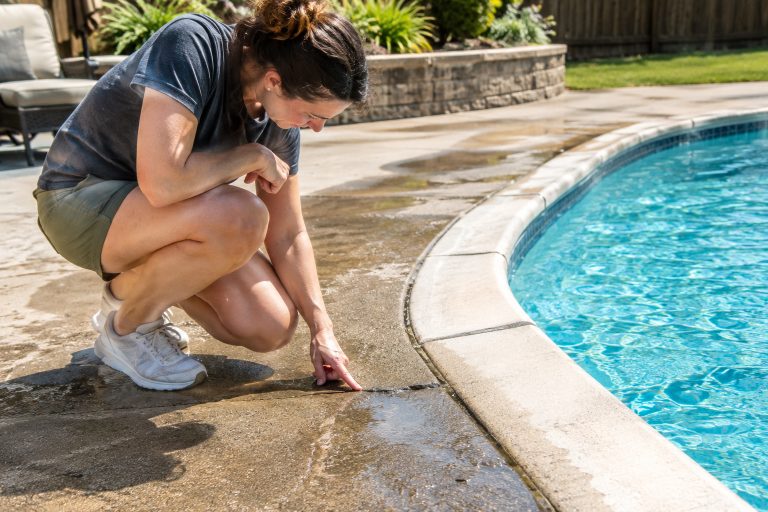
Start with a slow walk-around inspection. Look for hairline cracks that are widening, chipped or crumbling areas, faded texture, staining, and patches that no longer match the rest of the deck. Pay close attention to coping, steps, drains, joints, and transitions between the deck and nearby patios.
Uneven sections and standing water are especially important to document. Photograph the problem areas, note where puddles form after rain or normal pool use, and estimate the size of visible cracks. Those details make it easier to explain the issue when obtaining a professional assessment.
How to Reduce Surface Heat
Direct sun can make any poolside surface uncomfortable, especially during the hottest part of the day. Lighter colors often absorb less heat than darker ones, but color is only one factor. Material density, texture, shade, airflow, moisture, and the amount of daily sun exposure also affect how hot a deck feels.
Before choosing a finish, view physical samples outside rather than relying only on showroom lighting. If possible, place samples in both sun and shade, then check them at different times of day. Shade structures, umbrellas, trees placed thoughtfully away from the pool, and cooler walking routes can also improve comfort.
What to Look for in Slip Resistance
A decorative finish should not be so smooth that it loses practical grip when wet. Lightly textured concrete, exposed aggregate, certain coatings, and appropriately selected pavers can provide more underfoot texture than polished surfaces. The best option is not always the roughest one, since an overly aggressive texture can be uncomfortable on bare feet and harder to clean.
Ask how the proposed finish performs when wet, what preparation it needs, and how its texture should be maintained. Even a textured surface can become slippery when algae, soap residue, leaves, sunscreen, or standing water are present, so cleaning and drainage remain part of the safety picture.
Drainage, Access, and Walking Paths
Surface material cannot compensate for poor water management. The deck should direct water away from the pool area and building where appropriate, without creating low spots that hold puddles. Drains, joints, slope, edging, and transitions all contribute to how water moves across the space.
Keep primary paths clear around ladders, steps, gates, seating, and outdoor showers. Smooth transitions and stable footing can make the area easier for children, older adults, and guests with mobility needs to use. For public or commercial facilities, the accessible pool requirements state that routes and pool-entry features may need to comply with specific accessibility standards.
Repair, Resurface, or Replace?
The condition of the slab should guide the decision. Minor cracks, fading, stains, and worn texture may point toward repair or resurfacing when the base remains stable. Limited unevenness calls for an evaluation of the cause before any coating is applied.
- Consider repair or resurfacing when damage is mostly cosmetic or limited to the upper surface.
- Correct drainage first when water repeatedly pools in the same locations.
- Investigate structural issues when there is significant settling, heaving, deep cracking, or ongoing movement.
- Consider replacement or structural repair when the slab itself is no longer a sound base for a new finish.
Resurfacing can refresh a stable deck, but it should not be used to hide an underlying movement or soil problem that may continue to affect the surface.
Pool Deck Material Options
Each material category involves trade-offs. Concrete overlays can change color and texture without removing a stable slab. Exposed aggregate offers a naturally textured appearance. Stamped finishes can create the look of stone or brick, while textured coatings allow a wide range of colors and patterns.
Tile and pavers can add visual character, but joint maintenance, wet traction, heat, and drainage deserve careful planning. Cushioned or rubberized materials may suit selected zones where comfort or impact reduction is a priority. Compare options by traction, heat, cleanability, repairability, cost, and suitability for your climate.
A Simple Planning Process
- Inspect and photograph cracks, stains, puddles, loose edges, and trip points.
- Identify the main goal, such as safer footing, cooler surfaces, drainage improvement, or a visual update.
- Confirm whether the existing slab is stable enough for an overlay.
- Review samples outdoors in sun and shade.
- Ask about preparation, wet traction, cure time, cleaning, warranties, and future repairs.
- Compare complete project costs, including drainage work, edge details, crack repair, and cleanup.
Maintenance Tips for Long-Term Performance
Sweep debris regularly, rinse away sunscreen and spilled drinks, and keep drains or channels free of leaves. Use cleaning products suited to the deck material, and avoid abrasive tools that can wear down coatings or surface texture. Seasonal inspections of joints, edges, and transitions can help catch small defects before they worsen.
Poolside upkeep also supports safer use of the water itself. The CDC's guidance on healthy and safe swimming reinforces the value of maintaining clean, well-managed recreational water environments.
Common Questions
Is a textured pool deck always safer?
No. Texture can improve traction, but algae, residue, poor drainage, worn areas, and uneven transitions can still create slipping hazards.
Can a cracked pool deck be resurfaced?
Small surface cracks may be repaired before resurfacing. Deep cracks or signs of movement should be evaluated before covering the deck.
Should drainage be fixed before resurfacing?
Yes. If puddling is caused by slope or drainage issues, a new finish alone may not resolve the problem.
What should homeowners ask before choosing a finish?
Ask whether the slab is stable, how cracks will be prepared, how the surface performs when wet, which cleaning methods are recommended, and how future spot repairs will be handled.
Conclusion
A better pool deck balances safety, comfort, drainage, appearance, and maintenance. By identifying the real source of wear, testing material choices in outdoor conditions, and addressing water-management concerns before installation, homeowners can make a more confident decision and create a poolside space that is more enjoyable to use over time.