

Thous centuries old, Hanoi displays all of its layers — dynastic temples, French villas, Soviet monuments, and a food culture that is based almost entirely on plastic stools. On arrival it’s rather chaotic, but it’s difficult to leave.
Table of Contents
Getting Oriented
The historic trading grid in the Old Quarter, along whose streets the guilds were named. South of Hoan Kiem Lake is The French Quarter where the Opera House and broad boulevards are located. Around West Lake is a greener, quieter and where many foreigners who stay long-term reside is Tay Ho.
Things to Do
Take a stroll through the Old Quarter.
Thirty-six original streets, each previously used for a craft, silk, tin, bamboo and votive paper. Begin at Dong Xuan Market and ramble aimlessly. The streets around the square are closed on weekend evenings and transformed into streetscapes of street games and music.
Hoan Kiem Lake
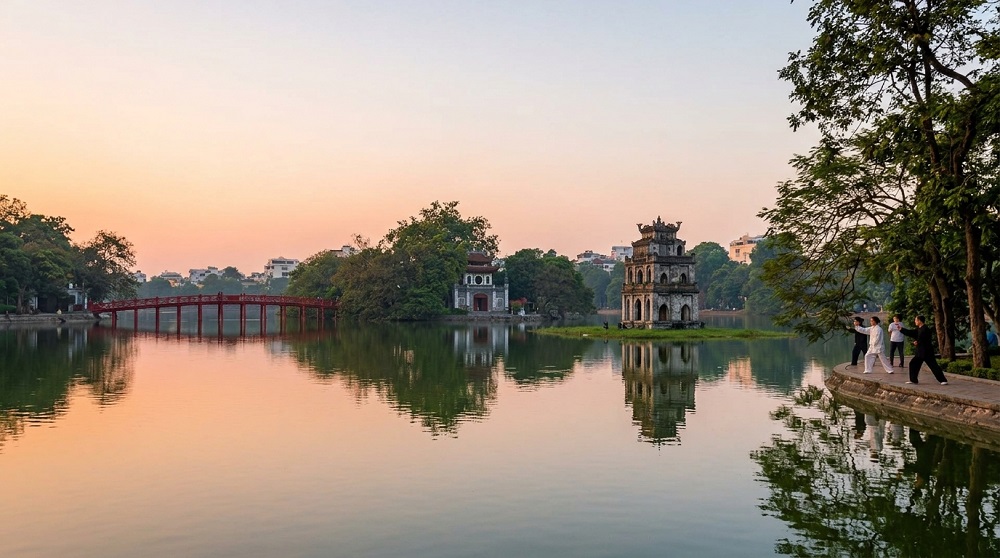
The city’s centre of gravity. Cross the red The Huc bridge to the Ngoc Son temple, and then arrive at 6am to see the hundreds of residents do tai chi and badminton on the shore.
Thang Long Imperial Citadel
A UNESCO site – a thousand years of Vietnam’s power, one of the underground command bunker of the American War.
Water Puppetry
An art form of the 11th century, created in flooded rice fields, with live traditional music over a pool. Stands are played multiple times per day and are approximately one hour in length.Shows are played multiple times a day and are about an hour long.
A note on Train Street is required.A note on Train Street is needed.
The rail line is a very narrow residential lane, with trains passing only inches from tables in cafes, and it has been closed to traffic several times in the past for safety reasons. Changes are made often — not always rely on the old blog posts, locally check.
History and Museums
The Ho Chi Minh Mausoleum complex houses the embalmed leader’s tomb, his stilt house and the One Pillar Pagoda: dress modestly and be prepared to abide by strict rules. Hoa Lo Prison, better known by the American POWs as the Hanoi Hilton, tells a telling but stark story. The Museum of Ethnology is the top place to learn about the Vietnam’s 54 ethnic groups.
What to Eat
Pho
Northern pho is less sweet than the southern, and features fewer herbs, but more emphasis on the broth. It’s better time to eat is breakfast.
Bun Cha
Fish sauce broth grilled pork patty served in a bowl with rice noodles and herbs. It’s Hanoi’s best and most typical dish and lunch item.
Cha Ca
Fish, cooked at home with turmeric and served with rice vermicelli, peanuts and shrimp paste, with dill and spring onion.
Egg Coffee
Egg yolk, condensed milk, whipped into strong Vietnamese coffee. Invented here in the 1940s when a shortage of milk led to the creation of this coffee with egg yolk as a thickener. Thick like it’s supposed to be, closer to dessert.
Bia Hoi
The fresh draft beer was daily brewed and sold on the streets for pocket change. The classic place is where Ta Hien and Luong Ngoc Quyen intersect.
Travel Tips
When to Go
September through November is the best time of year – dry, mild and clear. It is hot and humid in the summer and cold and grey in the winter months, where it sometimes snows and the temperatures can fall into the low teens.
Getting Around
Ride-hailing apps function effectively and prevent haggling. Pre-agree on any cyclo or taxi fares. Walking is feasible inside the Old Quarter, provided that you’re ok with parking on the pavement.
Day Trips
Both Ninh Binh and Ha Long Bay are within few hours. A half-day is all it takes to visit Bat Trang ceramic village.
Allow 3 days for Hanoi. The majority of people would’ve liked to have tried 4.