

Most burglaries aren’t sophisticated. They’re opportunistic — someone notices an empty house, tries a door, finds a window unlocked, and is gone in minutes. Which means most prevention isn’t sophisticated either.
The improvements below range from free to a few hundred pounds. The cheap ones matter more than people expect.
Table of Contents
Fix the Basics First
Check Every Lock Actually Works
Test every door and window lock before you go, including upstairs and bathroom windows. First-floor windows are opened more often than people assume, particularly where a flat roof or extension provides access.
Replace any lock that sticks, and make sure external doors are deadlocked rather than just latched.
Upgrade Weak Door Hardware
If your front door has an older cylinder lock, an anti-snap replacement is one of the highest-value upgrades available. Lock snapping is a common method of forced entry and takes seconds against unprotected cylinders.
Reinforced strike plates with long screws are similarly cheap and make kicking a door in significantly harder.
Secure the Perimeter
Lock side gates, sheds, and garages. Remove ladders, wheelbarrows, and tools from the garden — burglars regularly use whatever’s already on site to get in.
Trim hedges near windows and doors. Concealment is a burglar’s main advantage.
Make the House Look Occupied
Vary Your Lighting
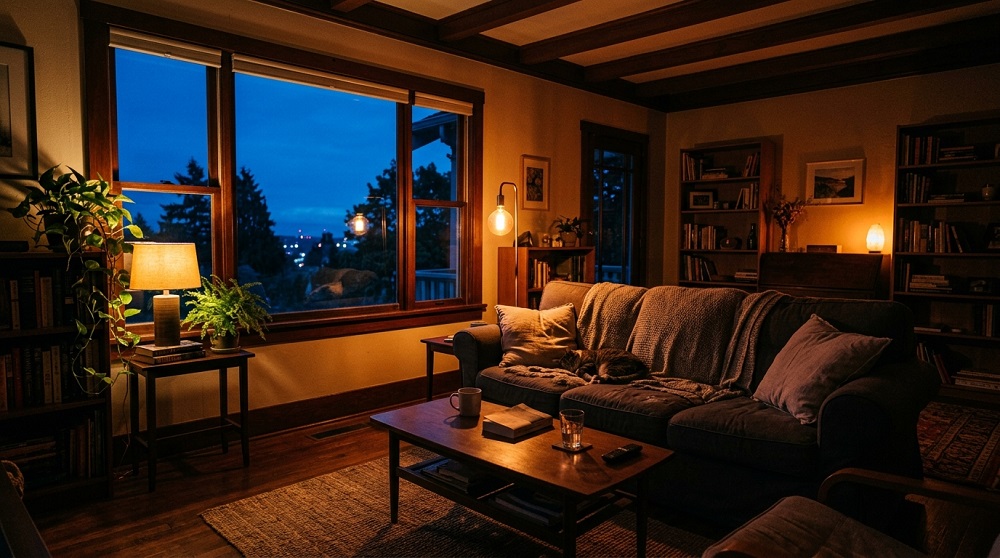
A lamp that switches on at 7pm every evening looks like a timer. Smart bulbs with randomised schedules, or several timers set to different rooms and hours, are far more convincing.
Outdoor motion-sensor lighting removes the dark approach entirely.
Stop the Visual Signals
Uncollected post, full bins, an uncut lawn, and unlit windows are the clearest indicators of an empty home.
Hold your post, ask a neighbour to bring bins in, and arrange for the lawn to be cut on longer trips.
Keep Curtains Normal
Fully drawn curtains for two weeks look wrong. Leave them roughly as you would when home, and move valuables out of sight instead.
Add Visible Deterrents
Cameras and doorbells work partly because they’re seen. A video doorbell lets you answer remotely — someone knocking to test whether the house is empty gets a response.
Alarm systems remain effective, and a visible alarm box or camera often redirects an opportunist to an easier target nearby.
Protect Valuables Properly
- Move jewellery, documents, and spare keys away from bedrooms, which are searched first
- Consider a bolted-down safe for passports and small valuables
- Photograph and record serial numbers of expensive items
- Never leave car keys near the front door — key fob signals can be relayed through walls
- Store fob keys in a signal-blocking pouch
The Human Element
Technology helps, but a neighbour helps more. Someone who knows you’re away, has a key, and will investigate an open door provides something no camera does — a response.
Give them your travel dates and a contact number, and return the favour.
Stay Quiet Online
Don’t announce departure dates or post live holiday photos. Location tags on social media tell strangers exactly where you aren’t. Save the posting for when you’re home.
Before You Walk Out the Door
- Every window and door locked
- Side gates, shed, and garage secured
- Ladders and tools stored away
- Timers and outdoor lighting set
- Post held, bins arranged
- Valuables and car keys relocated
- Alarm armed, neighbour informed
The Takeaway
Anti-snap locks, proper lighting, an alert neighbour, and no visible signs of absence will handle the overwhelming majority of realistic risk.
Spend on the front door cylinder first. Then make the house look lived in. Everything after that is refinement.