

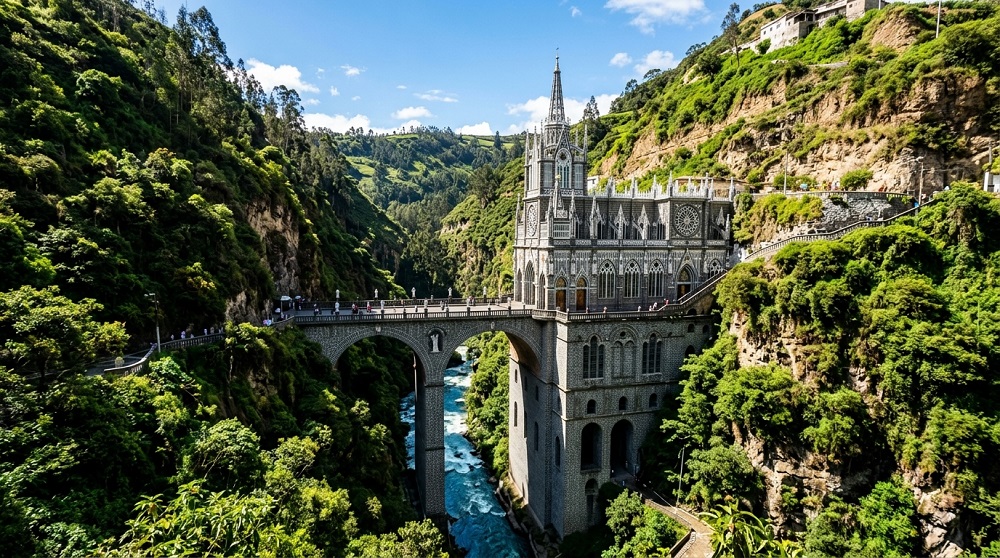
In a single country, Colombia shares Caribbean beaches, three Andean ranges, coffee highlands and the Amazon rainforest, and is connected by short domestic flights. It’s also one of the most rewarding first trips in South America (just two or three regions, not all of them!
Table of Contents
The Caribbean Coast
1. Cartagena
A beautiful and UNESCO-listed colonial walled city with balconies adorned with bougainvillea and horse-carriages. Discover street art and nightlife in Getsemaní, at prices lower than in the old town.
2. Tayrona National Park
Running in the jungle, directly into the sands of the Caribbean near Santa Marta. The postcard beach is Cabo San Juan which is accessed on a two hour walk down the coast. The park closes for several weeks each year when requested by the Indigenous communities.
3. Ciudad Perdida
A four day journey in the Sierra Nevada to a terraced city constructed around 800 AD, some 650 years before the construction of Machu Picchu. It is operated by a small number of licensed firms and is all regulated for the same fee.
The Andean Cities
4. Bogotá
The capital is at 2,640 metres. The Gold Museum possesses the best pre-Columbian collection of metalwork in the world; the colonial streets are provided by La Candelaria; and Monserrate provides the view over nine million people.
5. Medellín
Cable cars provide access to hillside neighbourhoods; the Comuna 13 escalators and murals recount the story of urban transformation, once a sign of violence, now. Springtime weather all year!
6. Guatapé
From Medellín, it’s a two-hour drive, and then a 200-metre flight of stairs up a granite monolith to get a great view of the flooded reservoir. A zócalo panel is painted all over the town itself.
The Coffee Region
7. Salento and the Cocora Valley
Green hills, working coffee farms open up to tourists, and a valley of wax palms, the world’s tallest palm species can grow up to 60 metres. This hike on the Cocora loop will take approximately 5 hours.
Colonial Towns and Canyons
8. Barichara and San Gil
Barichara is probably the prettiest colonial village in Colombia, with colonial architecture of stone streets and white walls. The adventure center of rafting, paragliding and Chicamocha Canyon is San Gil, which is located near the area.
Wild Colombia
9. Caño Cristales
The “river of 5 colours” in which a native aquatic plant is responsible for the colouring of the riverbed during the months of June to November approximately. Took a flight to La Macarena and met with required guides.
10. This is the Amazon at Leticia.This is the Amazon at Leticia.
At the Triple Border between Colombia, Brazil and Peru. Community lodges, river trips, pink river dolphins and upriver visit to Puerto Nariño.
Planning Notes
When to Go
Most of the country is dryest December to March, and July to August. The Caribbean coast is warm all year round; Bogotá, cool and frequently wet.
Getting Around
The domestic flights are also very inexpensive and are available on a regular basis, for instance, you can fly from Bogotá to Cartagena or from Bogotá to Medellín in about an hour, whereas it would take a full day of road travel. Make reservations for the cheapest price.
Safety
There’s a huge transformation in Colombia and the key destinations are road-trodden. However, conditions differ significantly across the region, so be sure to listen to the latest advisories from your government; don’t travel overland at night and be sure to take the local advice and keep valuables out of sight.
Language
Outside tourist areas and up-market hotels, English is limited. An advantage of the basic Spanish; the Colombians have a lot of patience for beginners.
Costs
Travel in the middle range is about $50 to $90 per person per day, and Cartagena is quite expensive compared to the rest of the country.
The coastline is included in two weeks and one Andean region. The three allow you to add the coffee zone or the Amazon.