

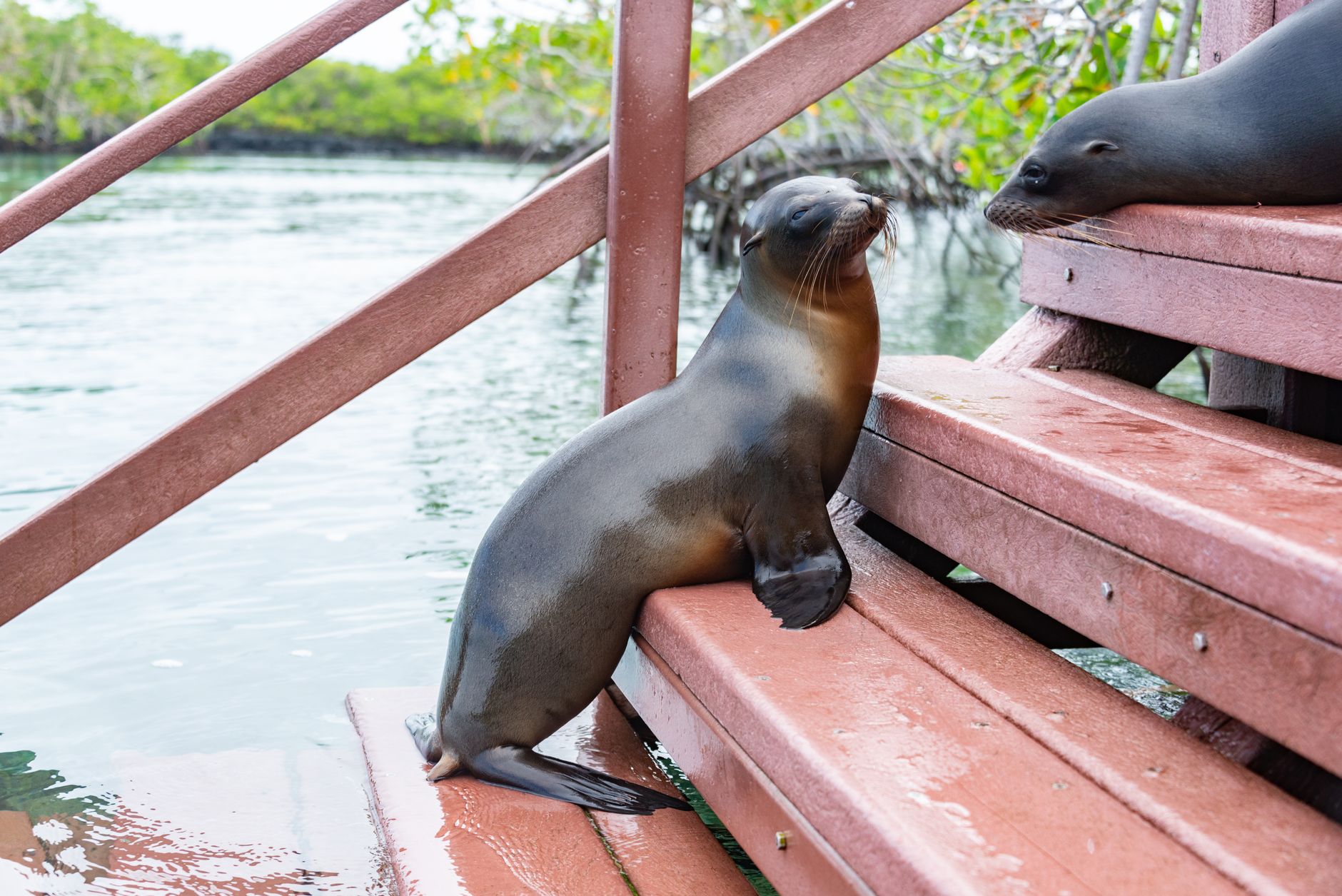
Getting to the Galápagos Islands takes effort no matter how you plan the trip, but once you arrive, the way you experience the archipelago varies enormously. A land-based hotel stay on Santa Cruz or San Cristóbal only puts a handful of sites within reach. A cruise, especially one with fewer than 100 passengers and a genuine focus on comfort, opens up dozens of islands, islets, and dive sites that most visitors never see. Here's why booking a higher-end vessel is worth the extra cost.
Table of Contents
Access to Islands You Can't Reach Any Other Way
Most of the 61 islands and islets that make up the Galápagos are uninhabited, and many have no dock, airstrip, or road leading to them. Boats are the only practical way to reach places like Genovesa, Fernandina, or Española, where some of the most concentrated wildlife viewing happens. A cruise itinerary is built specifically to string together these remote sites over five to eight days, something a land tour simply can't replicate.
Smaller luxury vessels also tend to carry zodiacs, or pangas, that allow for landings on rocky shorelines and narrow inlets larger ships can't approach. That flexibility matters in a place where the best wildlife moments often happen away from the main visitor trails.
Smaller Groups Mean Better Wildlife Encounters
The Galápagos National Park caps group sizes for guided walks, usually at 16 people per naturalist guide. Higher-end ships often carry 16 to 50 passengers total, which means shorter waits at landing sites and more time actually watching a blue-footed booby colony instead of standing behind a line of tourists. Larger tourist boats carrying 90 to 100 people have to split into multiple groups, which stretches out the schedule and can mean rushed viewing windows.
Fewer passengers also means the crew can adjust plans around weather, tides, or an unexpected sighting, like a pod of orcas near Isabela, without disrupting a large group's logistics.
Expert Naturalist Guides Included in Every Landing
Every boat operating in the Galápagos is required to carry certified naturalist guides, but the caliber and guide-to-passenger ratio differ sharply between budget and upscale operators. Higher-end ships often staff guides with decades of field experience, some with backgrounds in marine biology or ornithology, who can identify a lava lizard subspecies at a glance or explain why Darwin's finches on one island have thicker beaks than their neighbors on another.
This matters because the wildlife itself doesn't come with placards. Understanding what's happening in front of you, whether it's a marine iguana regulating its body temperature or a frigatebird stealing nesting material, depends entirely on the person narrating it.
Comfort After Physically Demanding Days
Galápagos itineraries are active by design, with hikes over volcanic rock, snorkeling in cold Humboldt Current water, and early wake-up calls to catch the best light and calmest seas. A well-appointed cabin with a hot shower, air conditioning, and a real bed makes a measurable difference after a day spent scrambling over lava fields on Bartolomé or swimming with sea lions off Santa Fé.
Many higher-end ships also offer sun decks, small pools, or hot tubs, along with stabilizers that reduce the rocking on longer overnight crossings between islands, which can otherwise be rough for anyone prone to seasickness.
Itineraries That Cover More Ground
A Galapagos luxury cruise typically follows a carefully sequenced route designed by the operator's naturalist team to hit a mix of ecosystems, coastal mangroves, highland forests, arid lowlands, and volcanic coastline, within a single trip. An eight-day itinerary might include the flightless cormorants of Fernandina, the flamingos of Rábida, and the giant tortoises of the Santa Cruz highlands, all without repeating a site. That range is hard to achieve with day trips from a single hotel base, which usually limit visitors to nearby islands only.
Food and Service Built Around the Experience
Kitchens on premium vessels tend to source fresh seafood and produce brought in from mainland Ecuador, with menus that rotate daily rather than repeating the same set dishes. Dining rooms often double as informal briefing rooms, where guides run through the next day's landing sites over dinner using maps and species checklists. Attentive crew ratios, sometimes close to one staff member per two guests, mean laundry, gear rinsing, and equipment setup for snorkeling or kayaking happen without guests having to think about it.
Higher Standards for Safety and Conservation
Operators running smaller, well-maintained ships generally invest more in updated safety equipment, biosecurity protocols, and waste management systems designed to minimize impact on a fragile ecosystem. Many also contribute directly to conservation programs, funding invasive species removal or supporting the Charles Darwin Research Station. Choosing a vessel with strong environmental practices supports the same wildlife populations that make the trip worth taking in the first place.
Before booking, check the passenger capacity, the guide-to-passenger ratio, and the specific islands on the itinerary rather than relying on marketing language alone. Those three details tell you more about the quality of the trip than any brochure photo of a sun deck ever will.