

Table of Contents
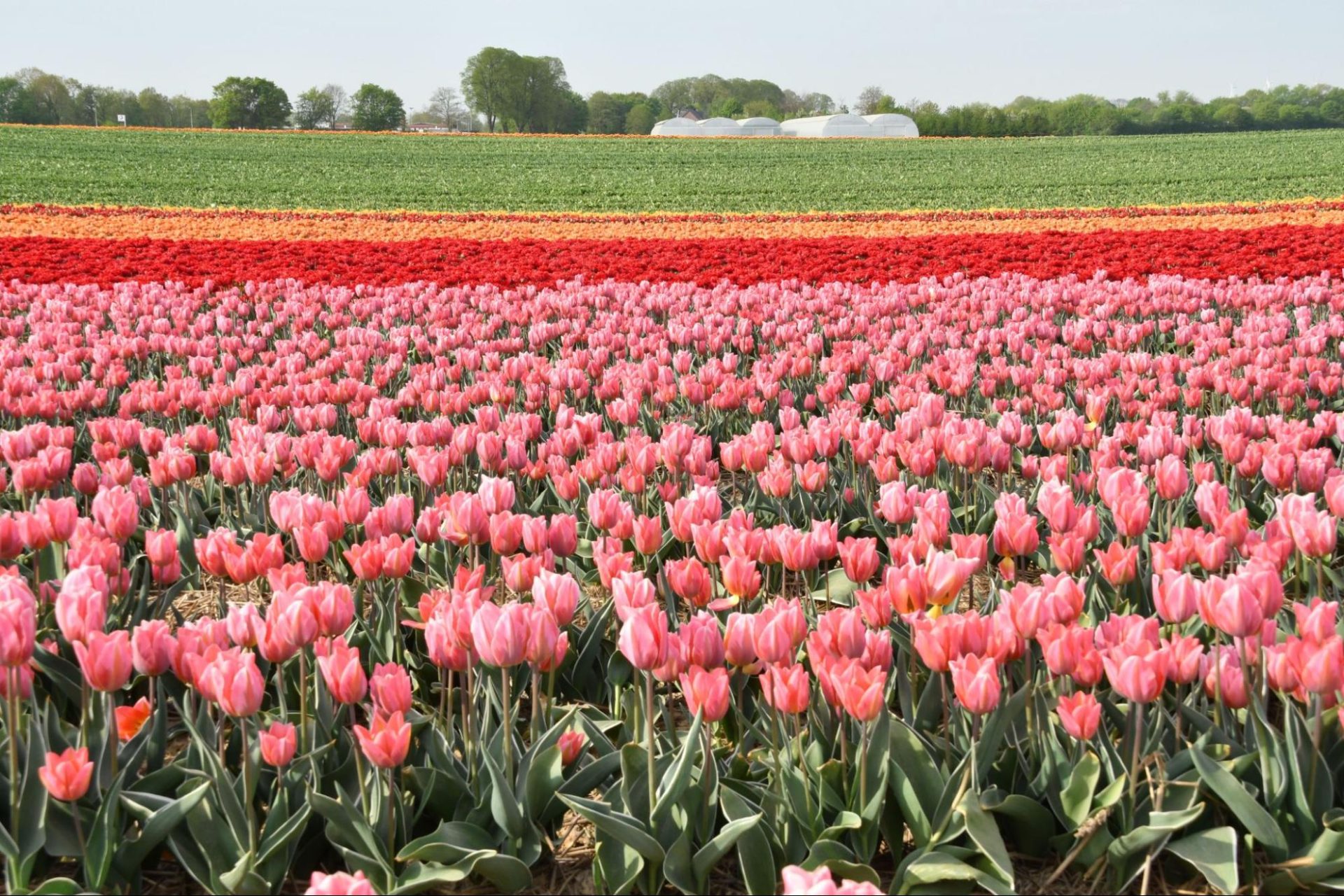
Every spring, the same thing happens to thousands of travelers. They book a trip to the Netherlands for "tulip season," arrive in the bulb region, and find either rows of bare stems or fields so crowded that the photos never quite match the postcards.
The problem is not bad luck. It is that tulip season is not a fixed date. It is a moving window that shifts every year with the weather, and the fields themselves follow a schedule set by growers rather than by visitors.
Understanding how that window works is the difference between standing in a sea of color and standing next to a field of green leaves.
What Actually Controls the Bloom
Tulips do not simply bloom when spring arrives. They bloom when a long, cold winter has done its job.
Bulbs need an extended chilling period before they can flower properly. University of Minnesota extension guidance on bulbs notes that they need a cold treatment of roughly 35 to 48 degrees Fahrenheit for a minimum of 12 to 13 weeks before they can bloom.
That is why the Dutch climate suits them so well. Cool winters provide the chill, and a gradual spring provides the warmth that pushes flowers up.
It also explains why peak timing moves. A mild winter and a warm March can bring the fields forward by a week or two. A cold, late spring holds everything back.
The scale of what you are seeing is enormous. A USDA report on the Dutch horticulture market describes the Netherlands as the world's leading exporter of floriculture, with around half of the global market, and notes that tulips are grown on almost half of all its flower bulb fields.
So the fields are not decoration. They are a working crop, which matters more than most visitors realize.
Where Tulip River Cruises Fit the Bloom Window
Because peak bloom is a moving target, one of the easiest ways to cover the region is to see several areas across a single week rather than betting everything on one day trip.
Celebrity Cruises groups its spring river sailings through the Netherlands and Belgium around the flower season, and a spring tulip river cruise of that kind passes Keukenhof, the commercial bulb fields and the canal towns over several days, which gives you more than one chance to catch the fields at their best.
That spread matters. Fields in different areas, planted with different varieties, rarely peak on the same day. Moving through the region lets you follow the color rather than wait for it.
The general timing rule is simple. Tulip season runs through spring, and April is usually the busiest and most colorful month for the tulip fields, with the exact peak shifting each year with the weather.
The Sequence of Spring Flowers
Tulips are not the whole show. The Dutch bulb region blooms in stages, and knowing the order helps you plan.
Crocus usually appears first, carpeting lawns and parks early in the season.
Daffodils and narcissus follow, filling fields with yellow before the tulips arrive.
Hyacinths bring intense color and a strong scent, often overlapping with early tulips.
Early tulips open next, followed by the mid and late varieties that create the famous striped fields.
If you arrive early in the season, you will likely see more daffodils and hyacinths. Arrive later, and tulips dominate. Arrive very late, and you may find the fields already cleared.
Why the Fields Get Cut Before You Expect
This is the detail that surprises most first-time visitors.
The commercial fields exist to produce bulbs, not flowers. Once the blooms have done their job and growers have checked the varieties, the flower heads are often topped off. That sends the plant's energy back into the bulb underneath, which is the part that is actually sold.
It means a field can look spectacular one week and be neatly green the next. The display gardens keep their flowers longer, but the working fields run on a grower's timetable.
The practical lesson is to avoid leaving the fields until the very end of the season, even if the calendar suggests you still have time.
Timing Around the Crowds
Spring is quieter than summer in Europe overall, but the bulb region is its own exception.
Europe's tourism is heavily concentrated in summer. Eurostat data shows that EU residents spent 15.7 percent of their tourism nights in July and 16.5 percent in August during 2024, with the busiest month running 3.7 times higher than the quietest.
Tulip season falls outside that summer rush, which helps with hotel availability and prices across much of the country. Around Keukenhof and the most famous fields, though, weekends in peak bloom can be very busy.
A few simple choices make a real difference:
- Visit on weekdays rather than weekends when possible.
- Go early in the morning, before tour buses arrive.
- Explore smaller roads and villages beyond the most photographed spots.
- Build flexibility into your plans in case the season runs early or late.
Getting to the Bulb Region
The Netherlands is compact and very well connected, which makes it easy to reach the flower areas.
How you travel can also shape your footprint. The European Environment Agency found that rail and waterborne transport produce the lowest greenhouse gas emissions per kilometer and unit transported, while aviation and road transport emit significantly more.
That suits the region well. Trains link Amsterdam, Leiden and Haarlem easily, bikes are a classic way to explore the fields, and the canals connect much of the country by water.
A Quick Planning Checklist
Before you book, run through a few practical checks:
- Pick a window, not a date. Plan around mid-spring and keep some flexibility.
- Watch the season news. Local bloom updates in early spring give a good sense of whether the season is running early or late.
- Combine gardens and fields. Display gardens hold their color longer, while working fields change fast.
- Stay a little longer. A few days in the region gives you more chances to catch peak color.
- Pack for changeable weather. Dutch spring can swing from sunshine to rain in an afternoon.
- Respect the fields. They are farmland, so stay on paths and never walk into the rows.
The Bottom Line
Dutch tulip fields do peak, but never on a date you can circle a year in advance. The bloom depends on a cold winter, a gradual spring and the grower's calendar, and it moves every season.
The travelers who see the fields at their best are the ones who plan around a window, stay flexible, and give themselves more than one chance to catch the color. Do that, and the postcard views stop being luck.