

A twelve-hour travel day is rarely ruined by one big thing. It’s ruined by a dozen small ones — a stiff neck, a dead phone, a cold cabin, a sandwich you regret. Fixing those small things is easier than most people expect, and it changes the entire experience.
Here’s what actually makes a difference.
Table of Contents
Get the Basics Right Before You Leave
Choose Your Seat Deliberately
Aisle seats suit anyone who moves often or drinks a lot of water. Window seats suit sleepers — you get something to lean on and nobody climbing over you. Avoid the last row and anything beside a toilet or galley.
On trains and buses, seats facing the direction of travel reduce motion sickness considerably.
Dress in Layers
Cabins, terminals, and stations swing between freezing and stuffy, often within the same hour. Layers let you adjust without repacking. Choose soft waistbands, breathable fabrics, and shoes you can slip off — feet swell on long journeys.
Eat a Real Meal First
Starting a long day already hungry guarantees you’ll eat whatever’s nearest at hour four. A proper meal beforehand buys you the freedom to be picky later.
Pack a Comfort Kit
Keep these in the bag at your feet, not overhead:
- Water bottle (empty through security, filled after)
- Snacks with protein and fibre — nuts, dried fruit, a bar
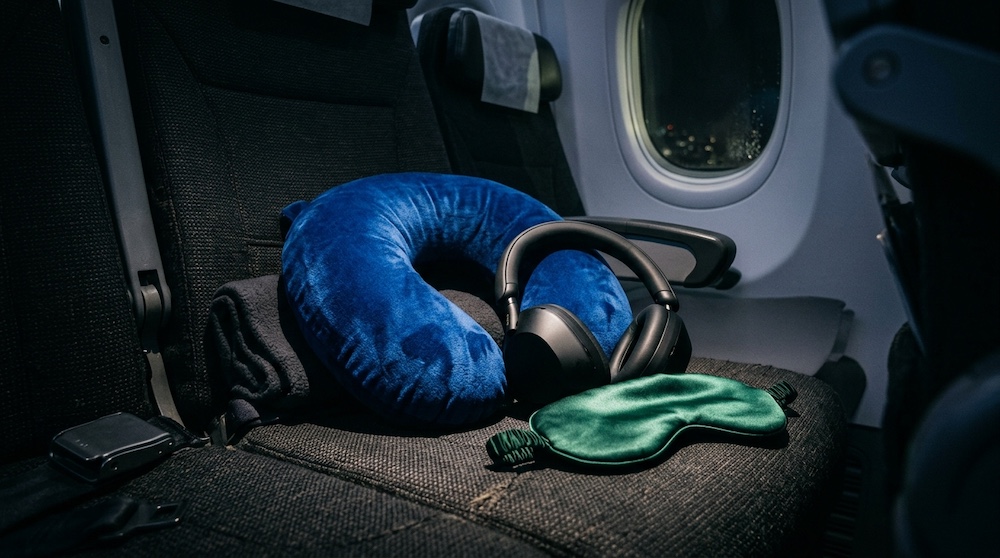
- Eye mask and earplugs or noise-cancelling headphones
- Lip balm and moisturiser — cabin air is drier than most deserts
- Phone charger and power bank
- A layer — scarf, hoodie, or wrap that doubles as a blanket
- Basic medication — painkillers, motion sickness tablets, anything you take daily
Anything you’d hate to lose or urgently need belongs here, not in checked luggage.
Take Care of Your Body
Move Regularly
Stand, walk, or stretch every couple of hours. It relieves stiffness and reduces the risk of circulation problems on very long journeys. Even ankle circles and shoulder rolls in your seat help.
Support Your Neck Properly
A neck pillow only works if it stops your head falling forward. Wearing it backwards — with the thick part under your chin — works surprisingly well for upright sleepers.
Hydrate More Than Feels Necessary
Dehydration causes most of the headaches and fatigue people blame on travel itself. Drink steadily. Go easy on alcohol and coffee, both of which make it worse.
Manage the Time Itself
Download Everything in Advance
Wi-Fi will be slow, expensive, or absent. Download films, podcasts, playlists, books, and offline maps before you go.
Have Low-Effort Options
Late in a long day, you won’t have the focus for a dense book or complex film. Keep something undemanding queued — familiar music, a light podcast, a puzzle game.
Set Expectations for Delays
Assume something will run late. Carry a snack and a charged battery as insurance, and the delay becomes an inconvenience rather than a crisis.
Small Touches That Punch Above Their Weight
- Wipe down your tray table and armrests
- Keep a pen for arrival forms
- Screenshot your bookings so you’re not hunting emails on bad Wi-Fi
- Wear compression socks on flights over six hours
- Keep one clean shirt accessible for a mid-journey change
The Takeaway
Comfort on a long travel day is cumulative. Nobody item transforms the experience — but water, layers, movement, downloaded entertainment, and a snack you actually like will collectively turn a miserable day into a tolerable one.
Pack the small things. They’re the ones you’ll be grateful for at hour nine.