

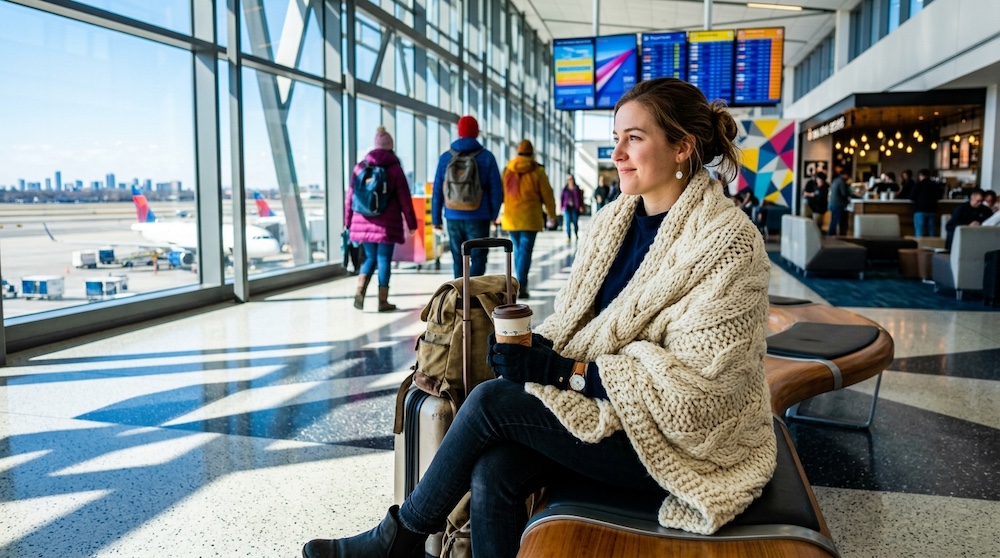
Travel gets sold as escape — a break from real life. But the more interesting effect is what happens after you come home. Time away has a way of loosening assumptions you didn’t know you were holding, and some of those changes outlast the tan.
Here’s how travel reshapes the way you live and think.
Table of Contents
It Interrupts Autopilot
Most days run on habit. You take the same route, eat the same breakfast, think roughly the same thoughts. It’s efficient, and it’s also why months blur together.
Unfamiliar places break that. You have to pay attention — to street signs, to how the bus works, to what people are actually saying. That heightened attention is why a week abroad can feel longer in memory than a month at home.
That alertness often follows you back. You notice things in your own city you’d stopped seeing years ago.
It Shows You That Your Way Isn’t the Only Way
Different Solutions to the Same Problems
Every culture has answered the same basic questions — how to eat, work, rest, raise children, treat strangers — and arrived at different answers. Seeing that firsthand is humbling in a useful way.
You may find that a slower lunch, a shorter workday, or a stronger habit of eating together actually functions well. Some of these you’ll want to import.
Assumptions Get Named
You can’t question a belief you don’t know you hold. Travel surfaces them. Ideas about how much space a person needs, what counts as polite, or how much stuff is normal all start looking like choices rather than facts.
It Builds Practical Confidence
Navigating a foreign transit system, ordering in a language you barely speak, or fixing a booking that fell through are small challenges — but they compound.
You return with quiet evidence that you can handle disruption. That transfers directly to work, relationships, and any situation where the plan falls apart.
It Recalibrates What You Need
Living From One Bag
Carrying everything you own for two weeks teaches something no article can. Most of what you packed goes unused. Most of what you own at home does too.
People often come back and clear out their cupboards. It isn’t discipline; it’s a changed sense of what “enough” looks like.
Experiences Over Objects
Spend a week where your best moments cost nothing — a walk, a conversation, a view — and the pull of the next purchase weakens a little.
It Improves How You Treat Time
Away from your normal schedule, you get to see which parts of your routine you actually miss. Some habits you’ll crave by day three. Others you won’t think about once.
That’s valuable information. It tells you what belongs in your life and what you’ve simply been doing out of momentum.
It Widens Your Empathy
Being the outsider — confused, dependent on strangers’ patience, unable to read a menu — is briefly uncomfortable and permanently instructive.
Once you’ve been helped by someone who owed you nothing, you tend to extend that more readily to others. It’s the least measurable benefit of travel and probably the most important.
Making the Change Stick
Perspective fades fast without effort. A few things help:
- Write down one thing you want to keep before you fly home
- Change something concrete in your first week back — a routine, a habit, a possession
- Stay curious locally: new neighbourhoods, new food, new people
The Takeaway
Travel doesn’t automatically make anyone wiser. Plenty of people go far and return unchanged.
What it offers is contrast — a clear view of your own life from outside it. What you do with that view is the part that actually improves your lifestyle.
1 thought on “How Travel Can Improve Your Lifestyle and Perspective”
Comments are closed.