

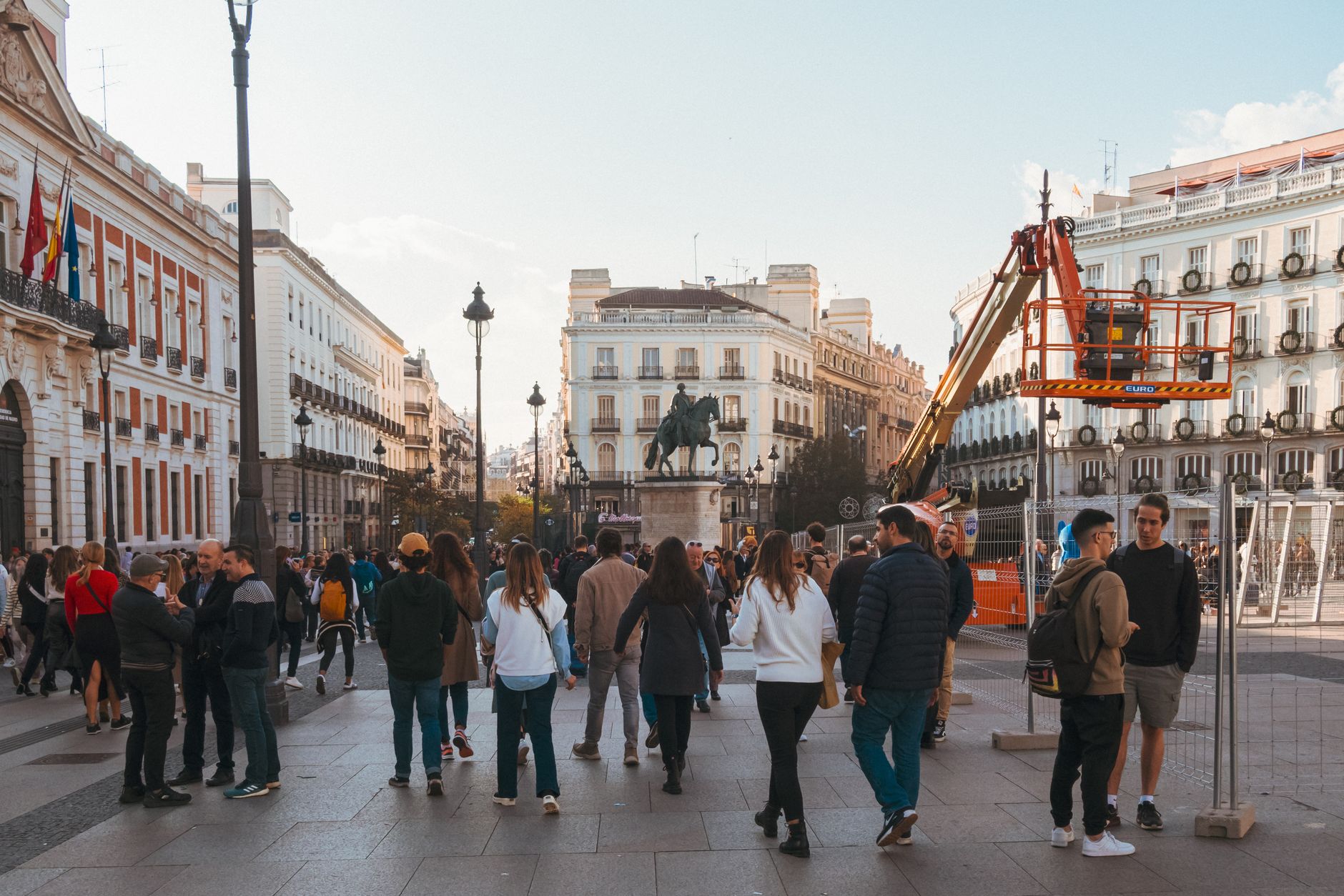
Madrid runs on a schedule that confuses most first-time visitors. Restaurants that look closed at 7 pm are actually just not open yet, and the streets that feel half-asleep at 4 pm come alive again by midnight. Rather than fighting this pattern, adjusting to it makes the entire trip easier and considerably more enjoyable.
Table of Contents
Reset Your Meal Times
Lunch in Madrid typically starts around 2 pm and can stretch to 4 pm, especially on weekends. Dinner rarely begins before 9 pm, and many locals don't sit down to eat until 10 pm or later. Showing up at a restaurant at 6:30 pm expecting a full dinner menu will usually result in disappointment or a half-empty tapas bar still setting up for the night.
If hunger strikes in that awkward mid-afternoon to early-evening gap, look for a cafe serving merienda, a light snack culture built around coffee, pastries, or a simple bocadillo. This isn't a lesser meal, it's a functional bridge between lunch and the late dinner hour, and plenty of small bakeries and coffee bars cater specifically to this window.
Expect the Midday Slowdown
Between roughly 2 pm and 5 pm, especially in smaller neighborhoods outside the tourist center, shops close and streets quiet down. This isn't universal in a city as large as Madrid, and plenty of businesses in central districts like Sol or Gran Vía stay open through the afternoon. Still, expect some shutters down, especially for smaller family-run shops.
Use this window deliberately instead of treating it as a wasted stretch. It's a natural time for a museum visit, since the Prado and Reina Sofía tend to be less crowded midafternoon than in the morning rush. Alternatively, treat it as downtime to rest before the evening, which genuinely does run later than in most other European capitals.
Plan Around Late Nights
Madrid's nightlife doesn't really start until after midnight on weekends, with bars filling up around 11 pm and clubs often not reaching full capacity until 1 or 2 am. This has less to do with excess and more to do with how the day is structured overall, since a 10 pm dinner naturally pushes everything else later. Trying to find a lively bar scene at 9 pm will mostly turn up empty venues and staff still setting tables.
If a full night out isn't the goal, plenty of wine bars and tabernas maintain a calmer atmosphere earlier in the evening, generally between 7 and 9 pm. This is a good stretch for a slower-paced glass of wine and some jamón before the city shifts into its later gear.
Use Public Transportation Like a Local
The Metro system runs efficiently and covers most of the city, with trains arriving every 3 to 5 minutes during peak hours. It operates from 6 am to 1:30 am, which fits neatly around Madrid's late schedule and means getting back from a midnight dinner rarely requires a taxi.
Buy a multi-trip Metrobús card at any station machine rather than paying single fares each time, since it works out considerably cheaper for anyone staying more than a couple of days. Buses fill the gaps the Metro doesn't reach, and night buses, known locally as búhos, run after the Metro closes for those out until sunrise.
Take Advantage of Guided Structure When Needed
Adjusting to a new rhythm is easier with some scaffolding, particularly on a short visit where wasted afternoons matter more. Structured walking tours or day trips can help make sense of the city's flow without requiring a fully improvised schedule. Booking through an established operator like Babylon Tours in Madrid gives visitors a reliable starting framework, covering major sites during hours that make sense logistically, while leaving the evenings free to explore at the city's own late-night pace.
This matters more than it might seem, since Madrid's museums, palaces, and historic sites often keep hours that don't overlap neatly with the city's social rhythm. A tour built around opening times and crowd patterns removes some of the guesswork, letting the rest of the day unfold more naturally.
Adjust Sleep Expectations
None of this works well without accepting that sleep patterns shift somewhat during a Madrid visit. A 10 pm dinner followed by a stroll through Retiro Park or a late coffee in Malasaña means bedtime creeps later than usual. Mornings can start a bit slower as a result, and that's fine, since most museums and shops don't open until 9:30 or 10 am anyway.
Trying to maintain an early-to-bed, early-to-rise schedule while also chasing Madrid's dinner and nightlife culture usually leads to frustration on both fronts. Choosing one rhythm and committing to it for the length of the stay produces a far smoother experience.
The Real Takeaway
Fitting into Madrid's rhythm isn't about forcing a routine, it's about recognizing that the city's clock runs about two to three hours behind most Northern European or American schedules. Shift meals later, treat the midafternoon lull as useful rather than dead time, and lean on public transit or a structured tour when logistics get complicated. Once the schedule clicks, the city stops feeling foreign and starts feeling like a place with its own practical logic.