

Table of Contents
Vietnam is booming. Nearly 17.6 million international visitors arrived in 2024, almost matching pre-pandemic numbers. Most of them needed one thing within an hour of landing: mobile data. If you are heading to Hanoi, Hoi An, or the Mekong Delta, an eSIM Vietnam plan is the fastest way to get online. This guide explains how it works, what it costs, and when it beats a physical SIM.
What an eSIM for Vietnam actually is
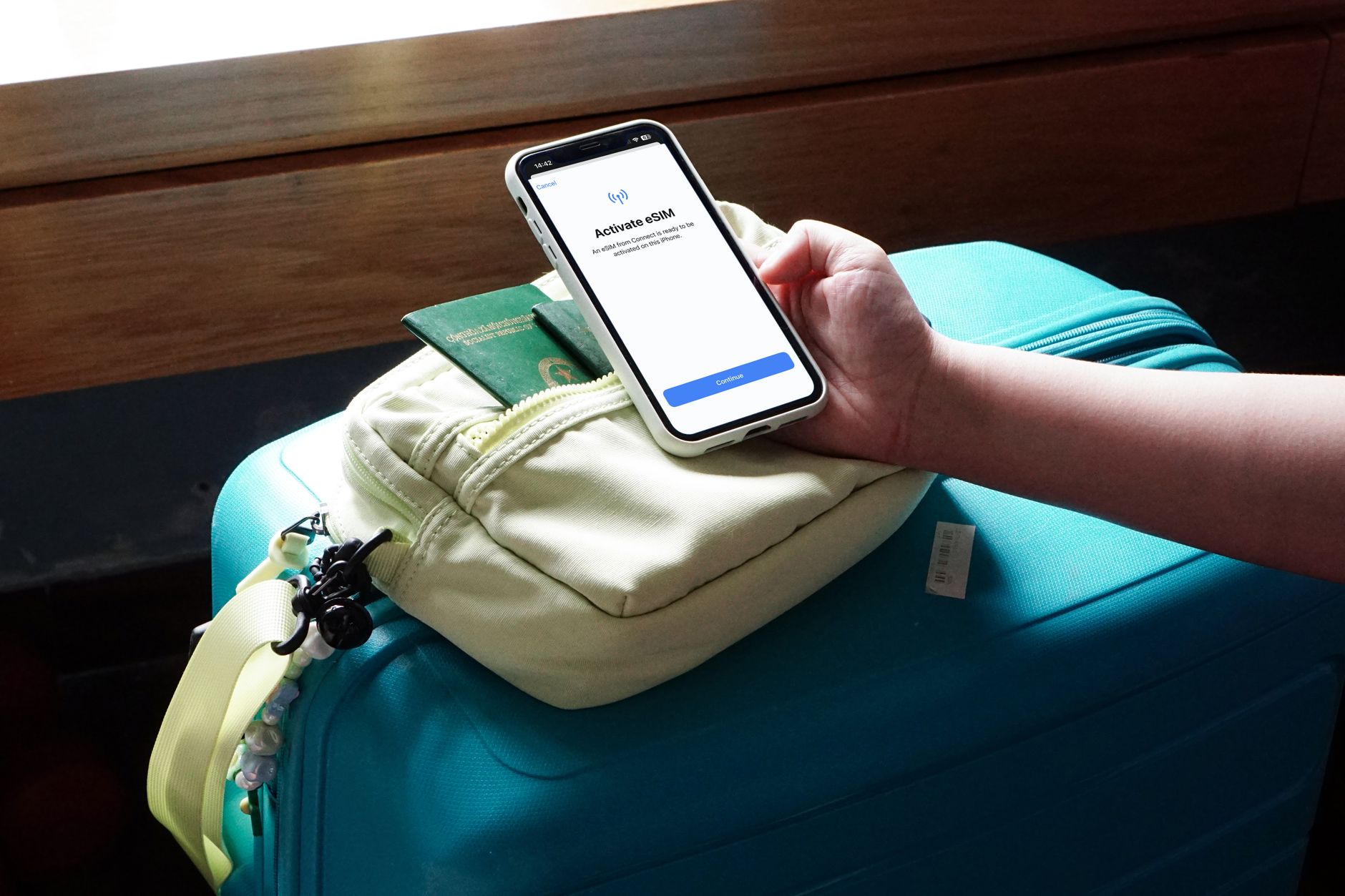
An eSIM is a digital SIM card built into your phone. You do not swap a plastic chip. You scan a QR code, install a data plan, and connect to a local network. The hardware is already inside most phones made after 2018.
In Vietnam, eSIM plans run on the three big carriers: Viettel, Vinaphone, and Mobifone. Viettel has the widest reach, including rural areas and the mountains near Sapa. That coverage matters once you leave the big cities.
The appeal is simple. You buy the plan before you fly, land, and switch it on. No queue at the airport kiosk. No passport photocopy. No haggling in a language you do not speak.
Does your phone support an eSIM?
Check this before you buy anything. An eSIM is useless on an incompatible handset.
- iPhone: XR, XS, and every model since, including the SE (2020 onward).
- Samsung: Galaxy S20 and newer, plus recent Z Fold and Z Flip models.
- Google Pixel: Pixel 3 and later, bought outside carrier lock.
Two quick warnings. Your phone must be carrier-unlocked. And some models sold in mainland China or Hong Kong ship without eSIM support, so check the exact variant.
eSIM versus a physical SIM in Vietnam
A local SIM from a Viettel store is cheap, often under five dollars for a generous data bundle. That is the honest counterargument. But cheap is not the same as convenient.
Airport SIM stands charge tourist markups. Shops in town cost less but eat an hour of your first day. You also surrender your passport for registration, which is now mandatory in Vietnam.
An eSIM skips all of that. You arrive already connected, ready to book a Grab ride or load a map. My view is clear: for a short or mid-length trip, the time saved is worth the small premium. For a six-week backpacking stint on a tight budget, a local physical SIM still wins on price.
How much data do you really need?
Travelers overbuy data constantly. Here is a realistic breakdown for a typical two-week trip.
- Light use (maps, messaging): around 500MB per day.
- Normal use (social media, some video): 1GB to 2GB per day.
- Heavy use (streaming, hotspot, calls home): 3GB or more per day.
Hotels, cafes, and even many sleeper buses offer free Wi-Fi. That cushion means most visitors are fine with a 1GB to 2GB daily allowance.
Where to buy an eSIM for Vietnam
You buy eSIMs online from specialist providers, then install them before departure. Compare three things: coverage, total data, and whether the plan includes a local phone number.
Most tourist eSIMs are data-only. That is fine for WhatsApp, maps, and Grab. If you need a Vietnamese number for app verification, confirm that detail before you pay, because many prepaid travel plans do not guarantee it.
If you want one plan that works across several countries on the same trip, Holafly sells abest travel esim with unlimited-data options that cover Vietnam and dozens of other destinations. That flexibility helps if Vietnam is one stop on a wider Southeast Asia route.
How to install your eSIM, step by step
The process takes about five minutes. Do it on hotel or home Wi-Fi, not on arrival at a chaotic airport.
- Buy your plan and wait for the QR code by email.
- Open your phone settings and choose to add a cellular or mobile plan.
- Scan the QR code when prompted.
- Label the line clearly, for example "Vietnam data."
- Turn on data roaming for that eSIM line only, then set it as your data source once you land.
Keep your home SIM active for calls and texts. The eSIM handles data. That split is the whole point.
Coverage: what to expect on the ground
In Hanoi, Ho Chi Minh City, and Da Nang, 4G and 5G are fast and stable. Maps, ride apps, and video calls all work without drama.
Signal thins out in remote spots. Expect weaker service in Phong Nha's caves, parts of Ha Giang, and some Mekong backwaters. A Viettel-based plan handles these areas best. Planning a city base first? Ourguide to visiting Hanoi pairs well with a data plan built for the capital.
FAQ
Can I use an eSIM for calls in Vietnam?
Most travel eSIMs are data-only. You can still call over WhatsApp, Zalo, or FaceTime using that data. For a real local number, choose a plan that explicitly includes one.
When should I install my eSIM?
Install it before you fly, while on stable Wi-Fi. Activation usually happens automatically when you connect to a Vietnamese network on arrival.
Does an eSIM work the moment I land?
Yes, once your plan's validity period has started and data roaming is enabled for the eSIM line. You should see signal shortly after leaving airplane mode.
Can I keep my regular number active too?
Yes. That is the main advantage. Your home SIM stays on for calls and texts while the eSIM carries all your data in Vietnam.
Is an eSIM cheaper than a local SIM?
Not always. A local physical SIM is often cheaper per gigabyte. The eSIM wins on convenience, instant setup, and skipping passport registration at the store.
The verdict
For most visitors, an eSIM is the smartest way to stay connected in Vietnam. You land ready to navigate, book rides, and share photos, with no airport queue. Budget backpackers on long trips may still prefer a local SIM. Everyone else should set up an eSIM before boarding and forget about it.