

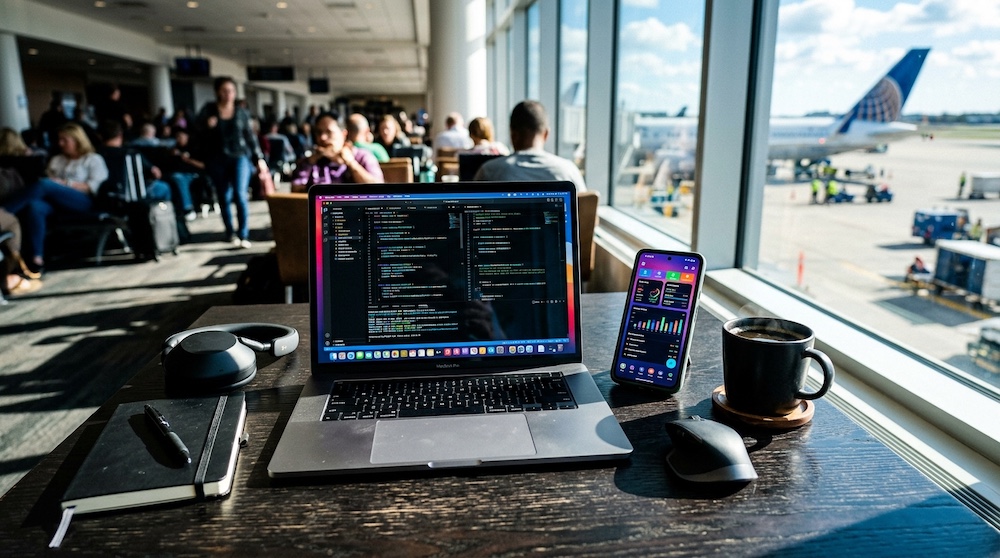
Work travel breaks the conditions productivity depends on — your desk, your routine, your uninterrupted hours. What replaces them is fragmented time: an hour in a lounge, forty minutes in a taxi, an evening in a hotel room after a long day.
The people who work well on the road aren’t more disciplined. They’ve matched their tasks to the time they actually have.
Table of Contents
Match the Task to the Time
Save Deep Work for Real Blocks
Anything requiring sustained thought — strategy, writing, complex analysis — needs an uninterrupted stretch. On the road, that usually means early morning before meetings start, or a long flight.
Protect those windows deliberately. They’re the only genuine focus time you’ll get.
Keep a Shallow Task List Ready
Fragmented time is good for a specific kind of work: approving things, replying to email, reviewing documents, updating notes.
Maintain a running list of these tasks so a surprise thirty-minute gap doesn’t get spent scrolling.
Do the Hard Thing First
Whatever matters most should happen before the day’s unpredictability starts. Once meetings begin, your schedule stops belonging to you.
Front-Load the Preparation
Most travel productivity is decided before departure.
- Download every file, document, and presentation you might need offline
- Finish deliverables at home rather than planning to “do it on the plane”
- Clear small admin tasks so they don’t follow you
- Brief your team on availability and nominate cover for urgent issues
Assume you’ll have less working time than you expect. You almost always will.
Build a Portable Setup
The Kit That Matters
A power bank, the right adapters, and noise-cancelling headphones do more for output than any productivity app. Add a mobile hotspot or eSIM — venue Wi-Fi is unreliable often enough to plan around.
A compact laptop stand and a small external mouse make hotel-desk work far less painful over multiple days.
Recreate One Working Cue
The same playlist, the same coffee ritual, the same first task each morning. A familiar signal helps your brain shift into work mode in an unfamiliar room.
Work Somewhere That Isn’t Your Bed
A desk, a café, a coworking space, or a hotel lobby. Working from bed degrades both the work and the sleep.
Protect the Inputs
Productivity on the road collapses through fatigue, not distraction.
Sleep is the largest single variable. One late night undermines two days of output. Keep a reasonable sleep window even when the trip encourages otherwise.
Food and water matter more than usual. Skipped meals and dehydration produce exactly the afternoon slump people blame on jet lag. Anchor one decent meal daily and carry a water bottle.
Movement — even a twenty-minute walk — reliably improves afternoon focus after long sedentary stretches.
Manage Expectations Honestly
Set an out-of-office that states your actual response time. Tell colleagues what you can and can’t turn around while travelling.
Then accept a lower output target. A travel day with two meaningful hours of focused work is a good travel day. Trying to maintain your normal desk output guarantees you’ll do neither the work nor the trip properly.
Use the Journey Deliberately
Long flights are one of the few genuinely uninterrupted blocks available. Decide beforehand what that time is for — one meaningful task, or deliberate rest.
Both are legitimate. What wastes it is arriving with no plan and defaulting to films.
Short journeys and waiting time suit the shallow list.
The Takeaway
You aren’t reproducing your office. You’re extracting real value from a fragmented, tiring schedule.
Prepare offline before you leave, protect one focus block a day, keep a shallow list for gaps, and defend your sleep. That’s the whole system.