

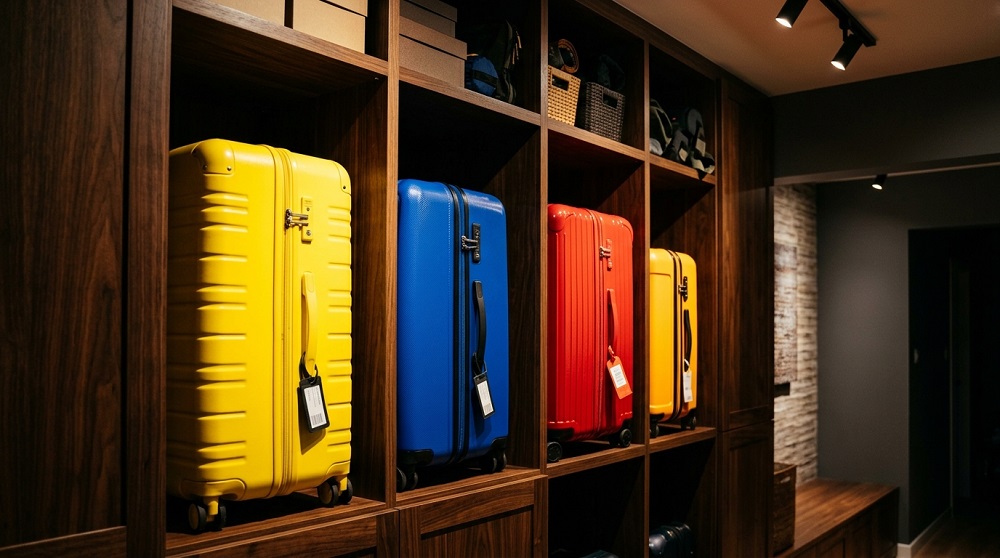
Frequent travelers have an unusual relationship with their home. It’s occupied in bursts, filled with gear that’s only used occasionally, and constantly cycling between packed and unpacked states.
That combination creates a specific storage problem — and a specific opportunity. If you’re away often, your home can be smaller and simpler than most, provided it’s organised around how you actually live.
Table of Contents
Design Around the Packing Cycle
One Zone for Everything Travel
Scattered gear wastes both space and time. Dedicate a single shelf, cupboard base, or wardrobe section to luggage, adapters, toiletry bags, and documents.
One location beats a large one spread across three rooms.
Store Inside Your Luggage
Empty suitcases are wasted volume. Fill them with the soft travel items you don’t need between trips — packing cubes, travel pillows, spare towels, cold-weather layers.
Nest smaller cases inside larger ones and store them upright rather than flat.
Keep a Permanent Ready Bag
A small bag that never gets unpacked — toiletries, charger, adapter, medication, eye mask — removes duplication entirely. You stop owning two of everything because one set lives permanently packed.
Use Vertical and Forgotten Space
The floor is rarely the constraint. Height usually is.
- Over-door organisers for shoes, accessories, or toiletries
- High shelving above door frames for luggage and seasonal items
- Under-bed storage on wheels for gear used a few times a year
- The back of cupboard doors for hooks, cables, and small pouches
- Wall-mounted rails in hallways instead of floor-standing furniture
Choose Furniture That Does Two Jobs
Multi-purpose pieces matter more in small spaces occupied irregularly.
Storage ottomans hold luggage and act as seating. Beds with drawers absorb an entire wardrobe’s worth of overflow. Fold-down desks disappear when you’re away. Nesting tables collapse to a single footprint.
Avoid anything large that serves only one function you use rarely.
Own Less, Deliberately
The Travel Advantage
Living from one bag for weeks teaches something useful: most possessions go unused. Frequent travelers are unusually well placed to act on that.
Apply the same standard at home. If you didn’t miss it while away, question whether it earns its space.
Buy Versatile Over Specialised
Clothing that layers and works in multiple climates reduces both wardrobe size and packing time. The same logic applies to kit — one good multi-tool over five single-purpose gadgets.
One In, One Out
Frequent travel means frequent temptation to buy. A strict replacement rule keeps accumulation flat.
Handle the Perishable Problem
Regular absences make food storage tricky. A smaller fridge with a well-stocked freezer suits the pattern better than the reverse.
Keep a shelf of long-life staples — pasta, tinned goods, coffee — so returning home doesn’t require an immediate shop. Buy fresh in small quantities when you’re actually there.
Reduce Maintenance Load
Fewer surfaces, less furniture, and simpler storage all mean less to clean before you leave and less to reset when you return.
Closed storage beats open shelving for anyone away often — dust settles visibly on display and invisibly behind doors.
Practical Wins
- Cable pouches instead of a drawer of tangled wires
- Vacuum bags for seasonal clothing
- Clear containers so you can see contents without unstacking
- Labels, so anyone can find things while you’re away
- A hallway drop zone for keys, passport, and the ready bag
The Takeaway
Build your home around the cycle you actually live: pack, leave, return, reset.
One travel zone, luggage used as storage, vertical space exploited, and noticeably fewer possessions than average. Frequent travel already teaches you what you don’t need — the win is applying that lesson to the place you keep coming back to.
1 thought on “Space-Saving Home Ideas for People Who Travel Frequently”
Comments are closed.