

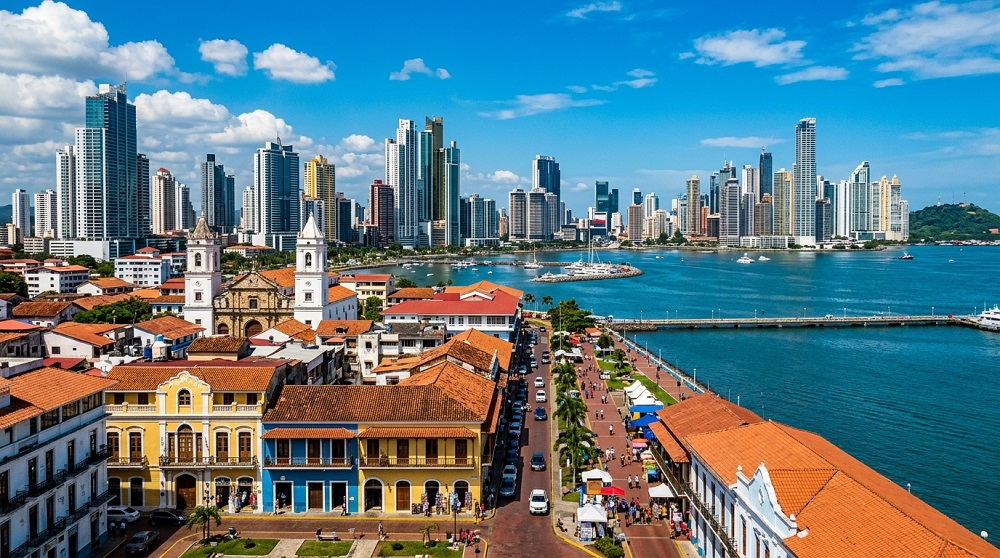
There are actually three cities in Panama City! Founded in 1519 and burned by Henry Morgan’s troops in 1671, Panama Viejo. The walled replacement, Casco Viejo, was constructed two years later. And the glass banking district which has risen in the past few decades. All three can be seen in a day, and rainforest is one of them that is within the city boundaries.
Table of Contents
Casco Viejo
Plazas and Churches
The quarter is centred on the Plaza de la Independencia and its flanks are the Metropolitan Cathedral and the Canal Museum. A golden altar, which local legend states priests painted black to conceal it from Morgan’s sack, is kept in the altar of the church, Iglesia San José. It was long believed that the flat Arco Chato had been standing without support for a century or more, and was known to be seismically stable enough to support a canal.
Views and Rooftops
The modern skyline frames across the bay the Plaza Francia at the southern tip that celebrates the failed French canal attempt. One evening on the quarter’s rooftop bars is worth for just that view.
The Canal
Miraflores Locks is a multi-story viewing platform, a museum and ships come and go several times a day (check the schedule as traffic tends to concentrate in windows). The larger expansion locks on the Caribbean side are for Agua Clara. There are selected dates for partial transits by passenger boat.
Green Space Inside the City
After a 30-minute walk, you will reach its best panorama, with sloths and toucans in the trees along the way, at the shoulder of Cerro Ancón. Metropolitan Natural Park protects tropical forest in the urban limits which is rare in the Americas. The Biomuseo, a Frank Gehry building of primary colours, and the small nature centre at Punta Culebra, home to the Smithsonian, are two intrusions into the Amador Causeway, constructed from canal excavation spoil, that connects four islands.
Markets and Eating
Mercado de Mariscos on the waterfront also has ceviche made in plastic cups, for a couple of dollars, but before noon. However, be sure to check out sancocho (chicken and vegetable stew, a national cure-all), ropa vieja, and patacones with everything. It is specialty coffee from the Boquete highlands in Panama, which is one of the world’s most expensive coffees and is served in specialty cafes in Boquete.
Day Trips
Isla Taboga is a 30-minute ferry ride from the Amador Causeway and features beaches, and hillside lanes. World-class birding, such as Pipeline Road, was right out the door at Gamboa and Soberanía National Park. Emberá community visits are arranged with the villages themselves – select operators working directly with them.
Practical Tips
Getting Around
The Metro is the first system in Central America and is clean, cheap. Ride-hailing applications are effective and eliminate fare negotiation. Traffic is heavy during rush hour, so make plans accordingly.
Money
Balboa coins, in addition to the US dollar, are legal tender. Cards are widely accepted in the city, although markets and small vendors accept cash.
Weather
Surrounding temperatures are hot and humid year round, ~30°C with a dry season from mid-December to mid-April. Heavy rain in the afternoon is possible if not, be prepared for an hour or so.
Safety
Casco Viejo, and the banking district all have good police services, but some neighbouring areas are not considered safe, and they’re especially dangerous at night. Always taxi or use an app after dark, don’t walk from district to district.
How Long to Stay
This is what two days covers: Casco Viejo and the canal! This makes this city special, because its only unusual to have both within an hour of the city, as opposed to rainforest or an island.