

For their first trip, Europe’s offerings are density: countries that are the size of a US state and train networks that take hours, not days. The way to think of it is that the 2 wks will be filled with seeing 8 cities. Resist it. These 10 locations are good combinations in pairs and trios, arranged regionally.
Table of Contents
Western Europe
1. Paris
Still the benchmark. Sightseeing starts with the Louvre, Musée d’Orsay or Notre-Dame, but it’s best to spend as much time exploring the neighbourhoods of Le Marais or Montmartre. Visit big museums online without the wait in line.
2. London
Free national museums, a thousand years of layers of history at Westminster and the Tower and the best theatre scene in the world. It costs a lot of money to stay in the place, but it is cheap to visit the culture.
3. Amsterdam
Canal rings, the Rijksmuseum and the Anne Frank House, which sell out weeks in advance. It takes two days to cover on foot or bike, and is an easy train hop from Belgium or Germany.
Central Europe
4. Prague
The castle complex, Charles Bridge and the astronomical clock form a large part of the medieval core which has not been damaged. Cross the river to Malá Strana for the same beauty but with less crowds.
5. Vienna
It’s the point of lingering in imperial palaces, world-class concert halls, and coffee houses. Two days in Schönbrunn and the Kunsthistorisches Museum are warranted.
6. Budapest
Ruin bars in the old Jewish quarter, the Danube-front parliament building and thermal baths. The most cost effective of the key European capitals.
The Mediterranean
7. Rome
One place to walk to see the Colosseum, the Roman Forum, the Pantheon and Vatican City. In the high season, timed-entry tickets will effectively be mandatory.
8. Barcelona
The Sagrada Família and Park Güell, by Gaudí, alleys in the Gothic Quarter and a beach in the city. Be aware that local pressures due to tourism are very real and make sure you are in licensed accommodation and have a good attitude.
9. The Amalfi Coast
Nerve-jangling coastal bus drives up to Cliffside Villages above sea level of the Tyrrhenian. The highlights are Positano and Ravello. Don’t visit during August.
The Alps
10. Swiss Alps
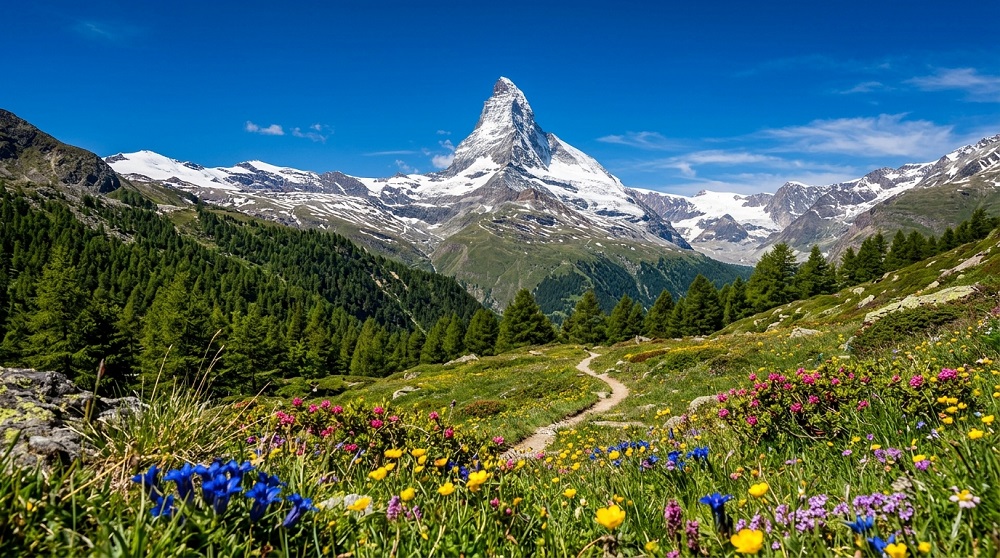
Stay in Lucerne or Interlaken for lake steamers, mountain railways and hiking between peaks, such as the Jungfrau. Expensive, and different from any other place in Europe.
Planning Essentials
Think about traveling at a slower pace than you are used to.Consider driving slower than normal.
2 or 3 cities/10 days versus 6. Every move requires 0.5 day of stationing, transfer and check in. The trip that people remember is the one that has the unstructured afternoons.
Trains, Then Planes
High speed train is faster than air travel for trips under five hours with the exception of the time spent at the airport. Make reservations weeks in advance for the lowest rates. Long-distance airlines are usually budget carriers, which is why they charge for luggage at a much higher rate.
Entry Requirements
The Schengen Area offers most visa-exempt visitors 90 days in every 180-day period. The rules governing the crossing of borders, and pre-travel authorisations, have been evolving, please verify the applicable requirements with your nationality prior to the booking of a ticket.
When to Go
The warmer months of the year (late April to June and September to early October) have more daylight hours and are less crowded than the summer months (July and August). Christmas markets and low prices in Central Europe in the Winter.
Costs
Expect wide variation. On the mid-range side, we can expect to find $70 to $120 per day in Central Europe and more than that in Paris, London or Switzerland.
Select one area to visit for an initial excursion. There will be a lot more to go back to in Europe.