

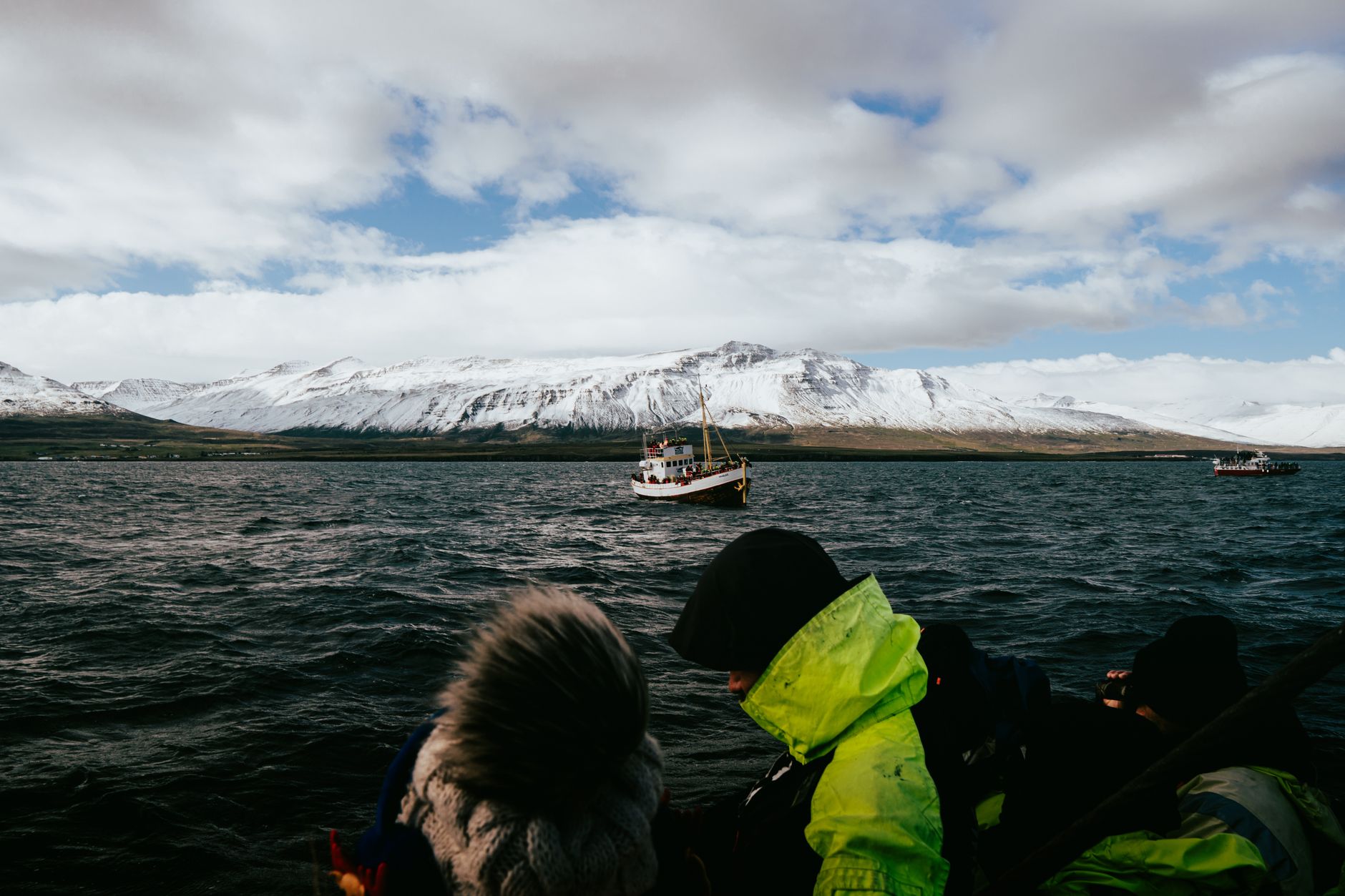
Few destinations feel quite as dramatic as Iceland in winter.
There are plenty of reasons to visit Iceland in winter, but two experiences tend to sit near the top of most travellers' wish lists: seeing the northern lights and stepping inside a natural ice cave.
Both capture something special about Iceland during the colder months.
One happens high above you, when an otherwise dark night sky suddenly begins to glow. The other takes you beneath the surface of a glacier, surrounded by ice that has been shaped and compressed over many years.
Neither experience can be completely controlled, which is partly what makes them so memorable.
For travellers planning a winter trip to Iceland, combining the two can create an itinerary that feels genuinely seasonal rather than simply visiting the same attractions you might see during summer with a little more snow.
Table of Contents
Why Winter Changes the Iceland Experience
Iceland's winter landscape has an entirely different character from its summer counterpart.
Snow can soften enormous lava fields, mountains become streaked with white and waterfalls may freeze around their edges. The sun remains low for much of the day, producing long periods of soft winter light.
Then darkness arrives.
Rather than signalling the end of the day's activities, winter evenings create an entirely new opportunity: looking for the aurora borealis.
This changing balance between daylight and darkness gives a winter itinerary a natural rhythm. Days can be spent exploring glaciers, waterfalls and volcanic coastlines, while evenings provide opportunities for geothermal bathing, relaxed dinners and northern lights hunting.
The key is not trying to fit too much into either.
Seeing the Northern Lights in Iceland
The northern lights might be one of Iceland's most famous winter attractions, but they are also one of its least predictable.
There is no set time for them to appear.
You need sufficiently dark skies, favourable solar activity and, crucially, gaps in the cloud cover. Even when all three seem promising, the aurora can still require patience.
That unpredictability is why it is better to think of the northern lights as something woven throughout a winter journey rather than a single activity scheduled for Tuesday at 9pm.
If you are spending several nights in Iceland, you have several opportunities to look.
Staying outside Reykjavík can help too. Away from the brighter lights of the capital, darker countryside locations offer better conditions for spotting weaker displays.
On the right evening, you might not need to travel anywhere at all. Sometimes the best northern lights experience starts by simply stepping outside your accommodation and looking up.
Don't Make the Aurora Your Only Reason to Travel
It is worth being clear about one thing before booking a winter holiday: nobody can guarantee the northern lights.
That should not be disappointing.
Iceland has more than enough to fill a winter trip even if the sky refuses to cooperate.
Planning days around experiences you can enjoy regardless of aurora activity means the trip never feels dependent on one unpredictable event.
Visit waterfalls along the South Coast. Walk across a glacier with an experienced guide. Explore a black sand beach beneath winter skies. Relax in geothermal water while the temperature drops around you.
Then, when evening arrives, check the conditions and see what the sky has planned.
If the northern lights do appear, they become an extraordinary addition to an already memorable journey rather than the only measure of whether the trip was successful.
Step Inside a Natural Ice Cave
If the northern lights represent the sky at its most dramatic, Iceland's natural ice caves reveal what is happening beneath the surface of its glaciers.
Ice caves form and change as water travels through glacial ice. Because glaciers are constantly moving, melting and reforming, the caves are not permanent structures.
That means an ice cave visited one winter may look completely different the following year.
Inside, the colours and textures can be remarkable.
Sections of ice may appear deep blue where compressed ice interacts with light, while other areas reveal white ice, dark volcanic ash and unusual patterns created as the glacier has changed over time.
Photographs are impressive, but being surrounded by the ice is something else entirely.
Why You Need an Experienced Guide
An ice cave is not somewhere to explore independently.
Glaciers are dynamic environments, and conditions within them can change. Experienced glacier guides assess whether caves are suitable to enter and provide the necessary safety equipment and instruction.
A knowledgeable guide also adds context to what you are seeing.
Rather than simply walking into an impressive blue space, you can begin to understand how the cave formed, why glacier ice takes on different colours and how Iceland's glaciers are changing.
This is one of the areas where guided travel becomes particularly valuable.
When comparing Iceland winter tours, look at how the itinerary approaches these experiences rather than simply whether "ice cave" and "northern lights" appear on a list of inclusions.
A good winter itinerary needs enough flexibility to respond to the conditions.
Give Yourself More Than a Couple of Days
It is possible to experience Iceland in a long weekend, but winter rewards travellers who have more time.
A longer itinerary means there is less pressure to travel large distances each day and more opportunity to adjust plans if the weather changes.
It also gives you several evenings rather than one chance to see the northern lights.
For a first winter visit, combining Reykjavík, the Golden Circle and the South Coast can provide plenty of variety without attempting to circle the entire country.
Along the way, you can experience geothermal landscapes, major waterfalls, black sand beaches and glacier scenery, while still leaving room in the itinerary for winter-specific activities.
Travelling more slowly also means you are not spending the best daylight hours racing between destinations.
Add a Glacier Experience During the Day
If you are visiting an ice cave, it is worth allowing time to experience the glacier itself rather than treating the cave as an isolated attraction.
Guided glacier walks can reveal crevasses, ridges and layers of ice that are difficult to appreciate from a distant viewpoint.
You may see dark lines of volcanic ash preserved within the glacier or notice how dramatically the surface changes within a relatively small area.
Iceland's glaciers tell a much bigger story than ice caves alone.
Combining the two creates a better understanding of the environment you are exploring and makes the journey into the cave feel like part of the experience rather than simply a photo stop.
Leave Space in the Schedule
The temptation when planning Iceland is to fill every available hour.
Winter is not the best season for that approach.
Weather changes. Road conditions change. An activity may start later than expected, or a guide might recommend altering the day's route.
Leaving space in the itinerary makes those changes much easier to manage.
It can also lead to some of the best moments of the trip.
Perhaps the weather clears unexpectedly and you have time to return to a waterfall in beautiful light. Maybe conditions for the northern lights suddenly improve and the evening's plans change entirely.
The more rigid your itinerary is, the harder it becomes to take advantage of those opportunities.
Remember the Quieter Winter Experiences
Northern lights and ice caves may be the headline attractions, but they should not overshadow everything else.
Some of the most enjoyable moments of an Icelandic winter trip are much simpler.
Standing beside a waterfall when the surrounding cliffs are covered in snow. Watching waves arrive on a black sand beach beneath a pale winter sky. Sitting in geothermal water after several hours outside in the cold.
Even driving through Iceland's open landscapes can become part of the experience when mountains, glaciers and frozen fields stretch across the horizon.
A good winter journey balances the spectacular experiences with enough time to appreciate these quieter ones.
A Winter Trip Worth Taking Your Time Over
The northern lights and natural ice caves are very different experiences, but they have one important thing in common: nature decides exactly what you will see.
You cannot ask the aurora to appear at a particular time, and you cannot expect a glacier to produce the same ice cave every year.
That unpredictability is part of their appeal.
It also makes Iceland a destination where flexibility, patience and local knowledge can be as valuable as a carefully planned itinerary.
Give yourself enough time, avoid trying to control every part of the journey and embrace the conditions you find when you arrive.
You might travel to Iceland dreaming about blue ice and green skies, but there is a good chance some of your favourite memories will come from the moments you never planned at all.