

One of the best things about a road trip is being able to stop whenever something catches your eye. You can spend a little longer in a town you like or change your plans when you come across an interesting hiking trail.
But adding tent camping to the itinerary introduces a few deadlines: when you need to reach the campground, how much daylight you'll have left, and how far you can drive the next morning after packing up.
If every day becomes a race to the next campsite, the trip can turn into a routine of driving, pitching the tent, and packing everything away.
The key is to plan your overnight stops around the places you want to explore, rather than trying to fit in as many campgrounds as possible.
Table of Contents
Choose Your Destinations Before Picking Campgrounds
When planning a road trip, it's tempting to find campgrounds along the route first and build the sightseeing around them. That may make accommodation easier to organize, but it can also mean missing places you actually wanted to visit.
A better approach is to choose your main destinations, such as national parks, coastal towns, or hiking areas, then look for suitable campgrounds nearby.
You don't necessarily need to stay right next to an attraction, but distance matters.
If saving a little on accommodation means driving an extra hour each day to get there and back, the savings may not be worthwhile.
Remember to allow time for stops that won't appear in your navigation app's estimate. Taking photos, stopping for meals, or going on an unplanned short hike can all push your arrival time later than expected.
When planning the final drive of the day, factor in the time needed to reach the campground and settle in, not just the drive between attractions.
Staying Two Nights Can Be Better Than Moving Every Day
A road trip doesn't have to mean sleeping somewhere new every night.
If several places you want to visit are close together, consider using one campground as a base for two nights instead of packing up and moving on each morning.
You might arrive on the first afternoon and spend some time exploring nearby. The next day, you can head straight to a hiking trail, lake, or neighboring town without taking down your tent. On the third day, continue to your next destination.
That leaves more time for the places you came to see and less time spent repeatedly setting up and breaking camp.
Of course, a single overnight stop still makes sense when you're covering a long distance.
The important thing is to decide how long each area deserves, rather than moving every day simply to make progress on the map.
Tent Weight and Setup Time Matter on Multi-Stop Road Trips
Spending several nights in one place calls for a different setup from changing campgrounds every day.
If you're staying somewhere for three or four days, a larger tent can provide more living space. But for a one-night stop before an early departure, portability and setup time may matter more.
After a long drive, most people would rather get settled quickly and have time for a walk or some rest than spend much of the evening dealing with camping gear.
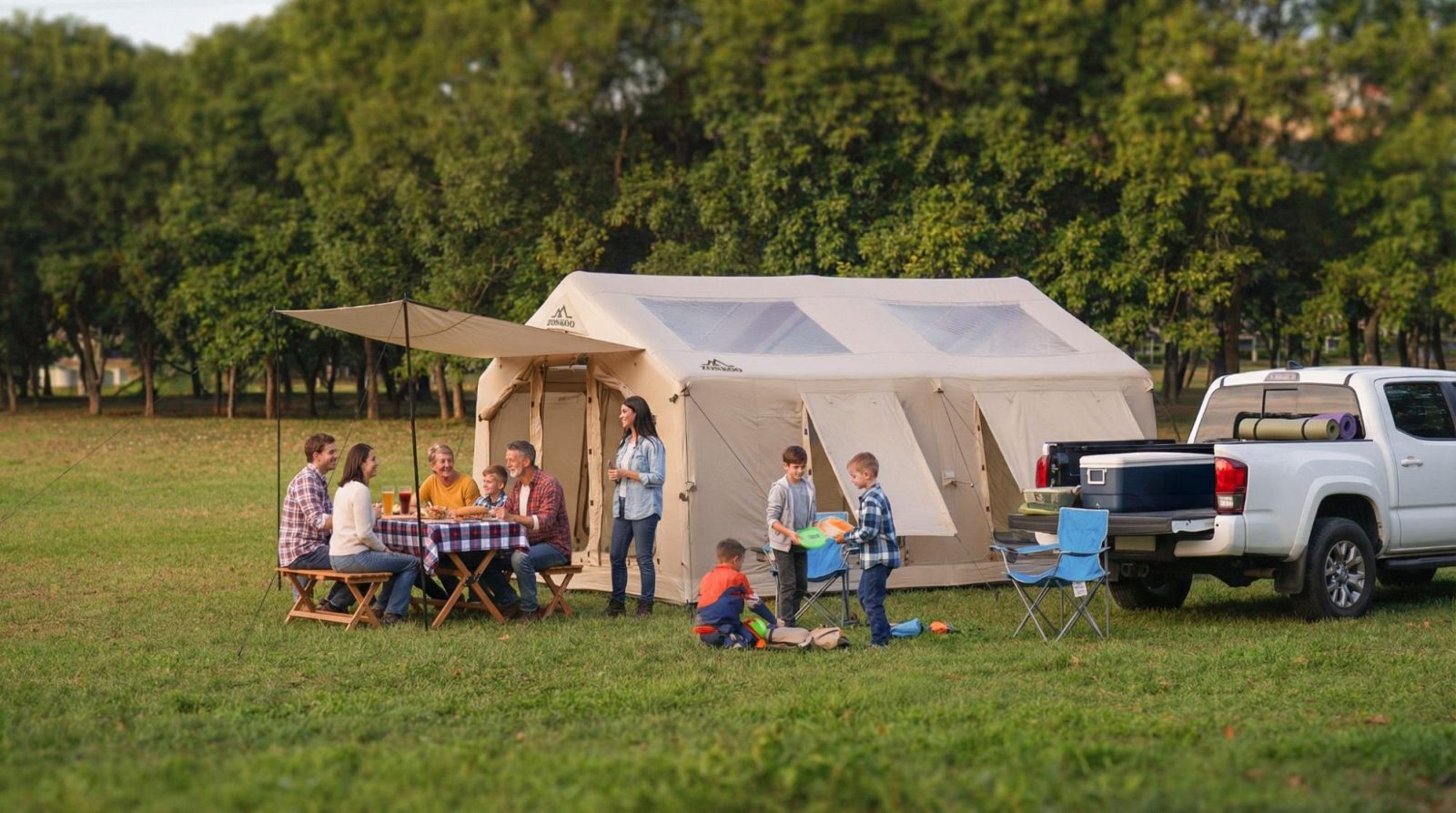
For example, small inflatable tents such as the ZONKOO Lyra weigh approximately 29 pounds, with a manufacturer-listed setup time of around three minutes for the tent structure. On a road trip with frequent campground changes, weight affects how much you need to carry each day, while setup time determines how much of the evening remains after arrival.
So, alongside sleeping capacity, consider how often you'll need to carry, set up, and pack away your tent during the trip.
Look Beyond the Map Before Booking a Campsite
A campground that looks convenient on a map may not work with your travel schedule.
Some require advance reservations, others have strict arrival times, and some involve a lengthy drive off the main road.
Before booking, check a few details that could affect your plans:
- Whether tent camping is permitted and same-day arrivals are accepted
- Check-in hours and any latest arrival requirements
- Availability of essential facilities, including restrooms and drinking water
- Whether you can park near your campsite and any vehicle restrictions
If you're expecting to arrive late, confirm that nighttime entry and tent setup are allowed. Having a reservation doesn't necessarily mean you can arrive at any hour.
For mountain or remote destinations, save the campground address, reservation details, and offline maps in advance in case you lose cell service.
These details may be less exciting than planning sightseeing stops, but they can prevent a frustrating situation: driving a long distance only to discover that you can't check in as planned.
You Don't Have to Camp Every Night
Weather, road conditions, and driving times don't always match what you planned before leaving home.
If a particular day involves a long drive or a very late arrival, camping may not be the most convenient option.
There's no need to stick to the same type of accommodation throughout the trip.
You can camp for several nights in places worth exploring slowly, then choose another type of accommodation when the main priority is covering distance.
If you're using inflatable tents for a multi-stop journey, also consider how much vehicle space they take up when packed and whether you'll regularly need to pack them while damp.
If you have to break camp after rain and can't dry the tent completely on-site, unpack and dry it as soon as conditions allow rather than leaving it damp for an extended period.
Being flexible about where you sleep means your route doesn't have to revolve around setting up a tent every evening.
Don't Base Your Budget on Campsite Fees Alone
Camping can sometimes reduce accommodation costs, but the nightly campsite fee is only part of the expense.
Driving out of your way to reach a campground may increase fuel costs. Campgrounds without the facilities you need can also mean paying extra for showers, laundry, or other services.
First-time campers will also need a tent, sleeping gear, and other basic equipment.
If you only expect to camp occasionally, there's no need to buy everything at once. Renting some items or using gear you already own may be more practical.
If you know you'll be taking regular camping road trips, black friday deals can be an opportunity to compare prices on essential equipment. Beyond the discount, consider whether the gear fits in your vehicle, how easy it is to carry, and how often you'll actually use it.
A realistic travel budget should account for transportation, accommodation, and equipment costs together, rather than simply comparing campsite fees with hotel rates.
Leave Time for the Stops You Didn't Plan
Sometimes the most memorable parts of a road trip are the places that weren't on your itinerary.
It might be a roadside café you happen to like or a scenic overlook where you planned to spend ten minutes but want to stay much longer. Having to leave just because you need to reach your campground can be disappointing.
That's why it helps not to fill every hour of the day.
If you plan to explore a nature reserve in the afternoon and drive to a distant campground that evening, a longer-than-expected visit could force you to choose between sightseeing and arriving on time.
A more relaxed itinerary allows enough time for driving, exploring, and checking in, rather than assuming everything will go exactly to schedule.
It also leaves room to adjust where you stop if weather or road conditions change.
Make Camping Part of the Journey
Tent camping should be part of your road trip, not another task you have to complete every day.
Stay an extra night somewhere worth exploring, choose a different place to sleep when you need to cover more ground, and leave enough time to enjoy unexpected stops along the way.
A tent gives you somewhere to sleep for the night. What you'll probably remember most are the places you never planned to stop.